New Book:
Theaters of Time and Space
American Planetaria, 1930-1970
By Jordan D. Marché II
Discusses the beginning of planetarium theaters in America, with some emphasis on the first five major American planetaria built in the 1930s, including Chicago's Adler Planetarium and Astronomy Museum and Pittsburgh's Buhl Planetarium and Institute of Popular Science.
Adler Planetarium History
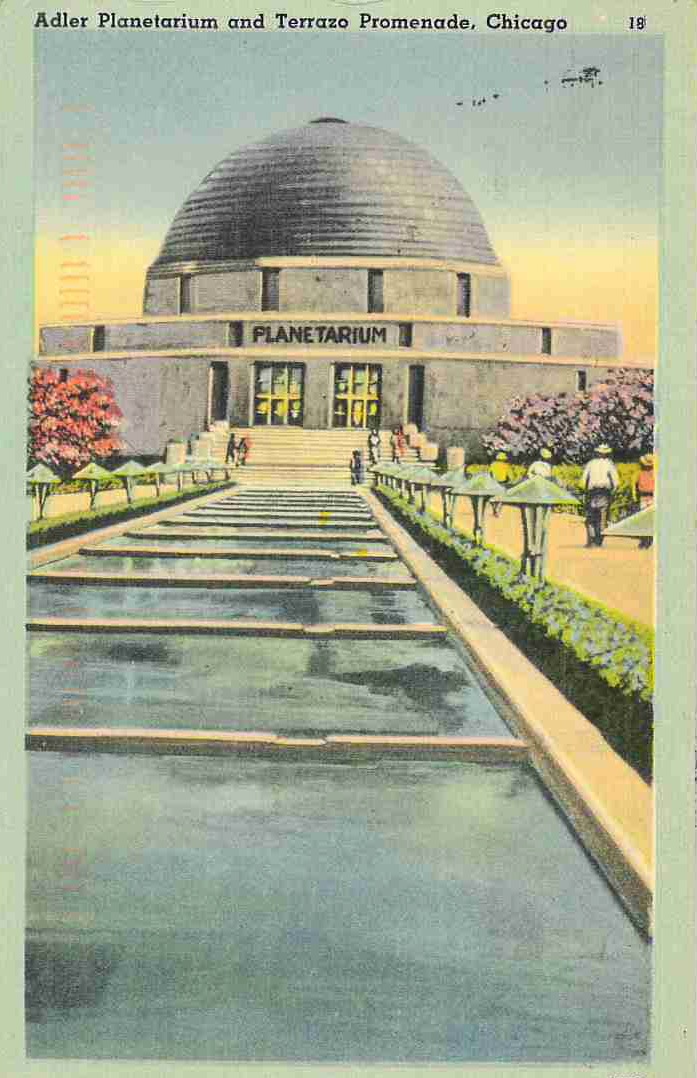
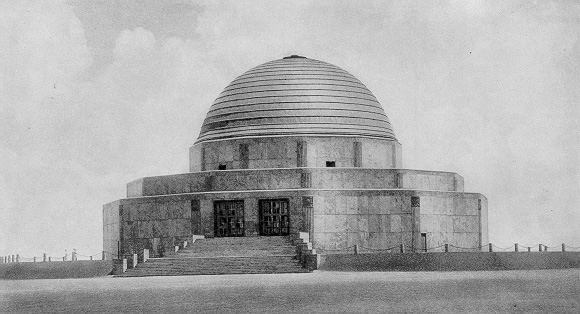
This image of Adler Planetarium, Chicago, comes from a 1930s-era postcard.
(Image Source: F.G. Graham, Professor Emeritus of Physics, Kent State University)
The Adler Planetarium and
Astronomy Museum was the first major planetarium constructed in the
Western
Hemisphere, funded by Chicago business leader Max Adler in 1930. With more than 2,000 astronomical and
other scientific
artifacts, it is also the Western Hemisphere's largest
museum of
astronomical history.
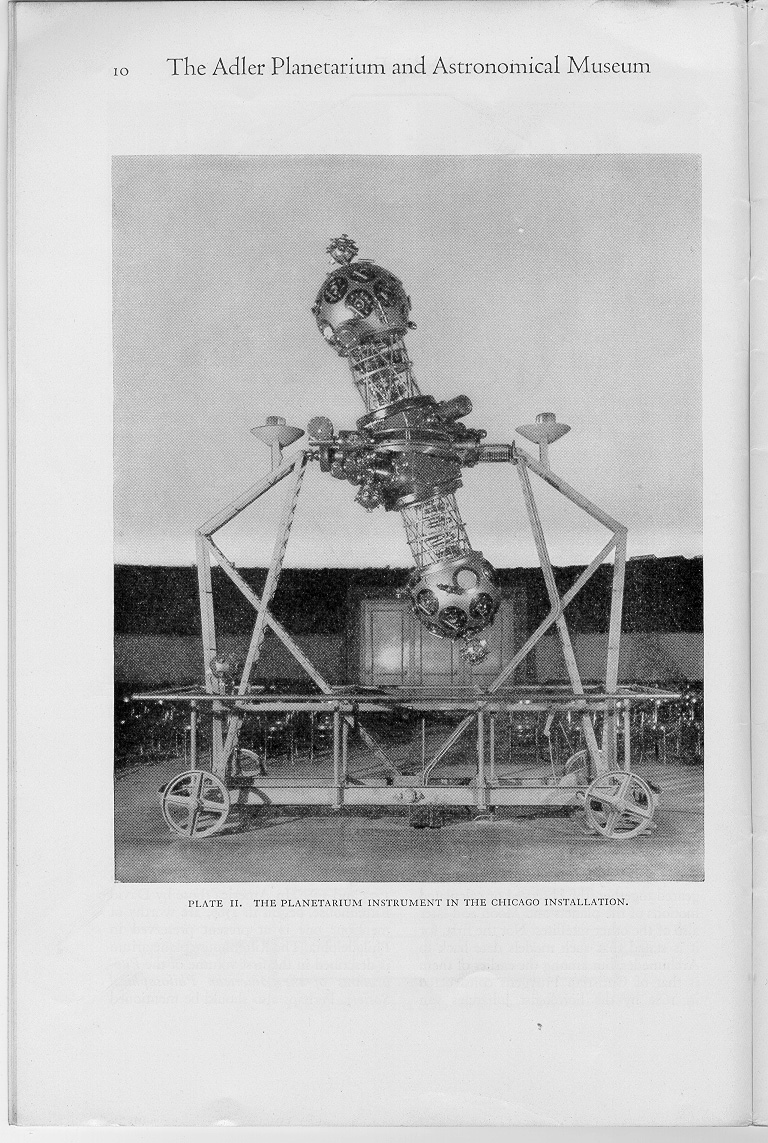
The Western Hemisphere's first Zeiss planetarium projector, a Zeiss Model II, started providing star dramas to the public at Adler Planetarium on 1930 May 12. In 1961, Adler Planetarium had this projector converted and upgraded from a Zeiss II to a Zeiss Model III.
In 1969, Adler Planetarium's historic Zeiss II / III was sold, and Adler Planetarium acquired a Zeiss Model VI. The Zeiss II / III last operated at Adler Planetarium on 1969 December 31. It, then, took two weeks to dismantle the Zeiss II / III, to prepare to be sent to Jackson, Mississippi. It took a couple more weeks to install the new Zeiss VI Planetarium Projector before it began presenting shows to the general public.
The Mystery of Adler Planetarium's Zeiss II / III Planetarium Projector
50-Year Mystery Solved !
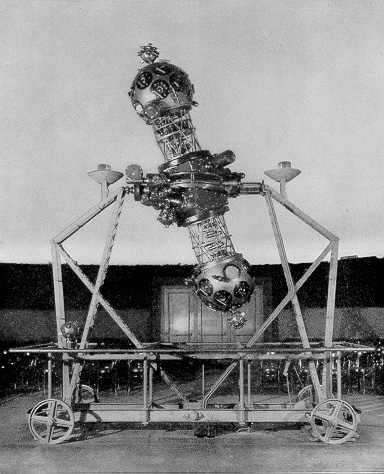
1933 photograph of the Zeiss II Planetarium Projector used from 1930 to 1969 at the Adler Planetarium in Chicago. This projector was replaced by a Zeiss VI in January of 1970.
In 1969, Adler Planetarium sold their original Zeiss II / III Planetarium Projector, the oldest planetarium projector in the Western Hemisphere, to the City of Jackson, Mississippi. So, it appeared that this historic projector would get a new life educating the citizens of Mississippi, as the citizens of nearby Baton Rouge, Louisiana were being educated by another historic Zeiss II / III projector used originally by the Griffith Observatory and Planetarium in Los Angeles. But, this was not to be.
This led to a 50-year mystery regarding the fate of Adler Planetarium's historic Zeiss II / III Planetarium Projector.
The Russell C. Davis Planetarium in Jackson, Mississippi had determined that the cost of rehabilitating the 1930 projector was significantly more than the cost of a brand new projector from a different vendor. So, once Adler's historic Zeiss II / III Planetarium Projector left Mississippi, it took a convoluted route ending-up in a barn in central Ohio some years later. But for most of the 50 years, most people had no idea where the projector was located; the Ohio purchaser kept a low-profile and did very little with the projector.
Planetarium enthusiasts Glenn A. Walsh and Brent Sullivan, with assistance from Gary Lazich, started looking for Adler's historic Zeiss II / III Planetarium Projector about 20 years ago. Through research, including telephone and electronic mail interviews with people who had involvement with the Adler Zeiss Projector, a narrative started to be assembled showing what may have happened to the projector, although there were conflicting stories that were difficult to reconcile.
Mr. Walsh compiled all of the stories on this Internet web-site, and asked web-site readers to contact him if they had additional information. After April of 2008, no further information was received.
At this Internet link is the compiled research, as displayed on this web-site prior to September of 2020.
On Thursday Morning, 2020 September 3, Mike Smail, Adler Planetarium Director of Theaters and Digital Experience, announced, during the first of a series of webinars sponsored by the International Planetarium Society (IPS) History of the Planetarium Working Group, that the Adler Planetarium had found and recovered the historic Zeiss II / III Planetarium Projector.
At this Internet link is the complete, prepared remarks of Mr. Smail, explaining what happened to Adler Planetarium's historic Zeiss II / III Planetarium Projector between 1970 and 2020 and how Adler Planetarium was able find and recover the projector.
Through the 1980s and early 1990s, Mr. Walsh had been a
Buhl Planetarium lecturer, using Buhl's historic
Zeiss II Planetarium Projector. He was also Astronomical Observatory Coordinator, in charge of Buhl's astronomical observatory using the historic
10-inch Siderostat-type Refractor Telescope.
Brent Sullivan is a planetarium collector and restorer. He has also been Director of Acquisitions and Restorations of the private Planetarium Projector & Space Museum in Big Bear Lake, California.
Gary Lazich was Manager of the Russell C. Davis Planetarium in Jackson, Mississippi.
In 1994, Mr. Walsh had started a grass-roots effort to prevent an Adler-type mystery from happening to another historic Zeiss Projector: the Zeiss II Planetarium Projector which had operated in Pittsburgh's Buhl Planetarium from 1939 to 1994. This is the only Zeiss II Planetarium Projector which had never had any major modifications from its 1939 installation.
Mr. Walsh petitioned Pittsburgh City Council for a special public hearing on the proposed sale of the historic Zeiss II Planetarium Projector, which is legally owned by the City of Pittsburgh. At the conclusion of the 1995 May 18 public hearing, City Council decided the historic instrument should remain in Pittsburgh. Today, Buhl Planetarium's historic Zeiss II Planetarium Projector is on public display in the first-floor Atrium Gallery of Pittsburgh's Carnegie Science Center (located one mile southwest of the original Buhl Planetarium building, on the North Shore of the Ohio River).
Webinar Remarks of Mike Smail: "There and Back Again: 90 Years of Adler's Zeiss Mark II"
Recovery: Adler Planetarium Zeiss II / III Planetarium Projector - Photos
International Planetarium Society (IPS) ***
IPS History of the Planetarium Working Group
Graney, Christopher M.
"Oldest U.S. Planetarium Projector Found & Recovered." Blog-Post: Re-Print of SpaceWatchtower Blog-Post.
Sacred Space Astronomy (Vatican Observatory Foundation) 2020 November 14. First retrieved 2020 November 15.
Walsh, Glenn A.
"Mystery Solved! Oldest U.S. Planetarium Projector Found & Recovered." Blog-Post.
SpaceWatchtower 2020 Sept. 18. First retrieved 2020 Sept. 18.
A 50-year mystery has been solved! America's oldest planetarium projector, the Zeiss II / III Planetarium Projector operated
at Chicago's Adler Planetarium from 1930 to 1969, has been found and recovered.
About 20 years ago, planetarium historians Glenn A. Walsh and Brent Sullivan, with assistance from Gary Lazich, started
looking for Adler's historic Zeiss II / III Planetarium Projector. Through research, including telephone and electronic mail
interviews with people who had involvement with the Adler Zeiss Projector, a narrative started to be assembled showing
what may have happened to the projector...
In 1935, the Buhl Foundation (then, the nation's 13th largest philanthropic foundation) announced that they would build a
planetarium in memory of Henry Buhl, Jr., who had owned one of Pittsburgh's major department stores, Boggs and Buhl.
The Buhl Planetarium and Institute of Popular Science opened in 1939. AAAP co-founder Leo Scanlon (who, in November
of 1930, had constructed the world's first all-aluminum astronomical observatory dome) was one of the first two Buhl
Planetarium lecturers.
A 50-year mystery has been solved! America's oldest planetarium projector, the Zeiss II / III Planetarium Projector operated at Chicago's Adler Planetarium from 1930 to 1969, has been found and recovered.
About 20 years ago, planetarium historians Glenn A. Walsh and Brent Sullivan, with assistance from Gary Lazich, started looking for Adler's historic Zeiss II / III Planetarium Projector. Through research, including telephone and electronic mail interviews with people who had involvement with the Adler Zeiss Projector, a narrative started to be assembled showing what may have happened to the projector...
In 1935, the Buhl Foundation (then, the nation's 13th largest philanthropic foundation) announced that they would build a planetarium in memory of Henry Buhl, Jr., who had owned one of Pittsburgh's major department stores, Boggs and Buhl. The Buhl Planetarium and Institute of Popular Science opened in 1939. AAAP co-founder Leo Scanlon (who, in November of 1930, had constructed the world's first all-aluminum astronomical observatory dome) was one of the first two Buhl Planetarium lecturers.
Inspiration for Buhl Planetarium in Pittsburgh
One of the people to visit this new institution, in its first year of
operation, was
Leo
J. Scanlon of the Summer Hill neighborhood on
Pittsburgh's North Side. The previous year (on June 9, 1929),
Mr. Scanlon
and Chester B. Roe co-founded the
Amateur Astronomers' Association of
Pittsburgh. Later in 1930,
Mr. Scanlon would construct the world's
first
astronomical observatory with an all-aluminum dome, in the back yard of
his property. The Valley View Observatory was razed in August of 1997.
However, the historic observatory dome was kept and will be placed atop a
new Valley View Observatory, to be constructed near the Nicholas E. Wagman
Observatory in Deer
Lakes Regional County Park (northeast of
Pittsburgh),
operated by the Amateur Astronomers' Association of Pittsburgh.
Leo Scanlon was so impressed with the Adler Planetarium, and with this new
method of explaining Astronomy
to the public, that he, and the Amateur Astronomers' Association of
Pittsburgh, started lobbying Pittsburgh foundations, and the Pittsburgh
City Government, to obtain funding for construction of a planetarium in
Pittsburgh.
Their efforts were successful when, in 1937, the Buhl Foundation agreed to
construct a planetarium and science institute for Pittsburgh. The City of
Pittsburgh agreed to provide a prominent site on the City's North Side for
the institution. The Buhl Foundation paid the entire cost of the
$1,070,000 building -- then conveyed The Buhl
Planetarium and Institute of Popular Science, and all of its contents,
to the City of Pittsburgh at the building's dedication on 1939 October 24.
Leo Scanlon became one of the first two Planetarium Lecturers in Buhl's
"Theater of the Stars." The other Planetarium Lecturer was Nicholas E.
Wagman, Ph.D., then Director of the University of Pittsburgh's Allegheny
Observatory (located only three miles north of the Planetarium).
Mr.
Scanlon passed-away on 1999 November 27, at the age of 96 years.
Additional Adler Planetarium History
* Adler Planetarium's
Webster Institute for the History of Astronomy
* Adler Planetarium's
Zeiss Projector Collection, 1929-1986 Finding Aid
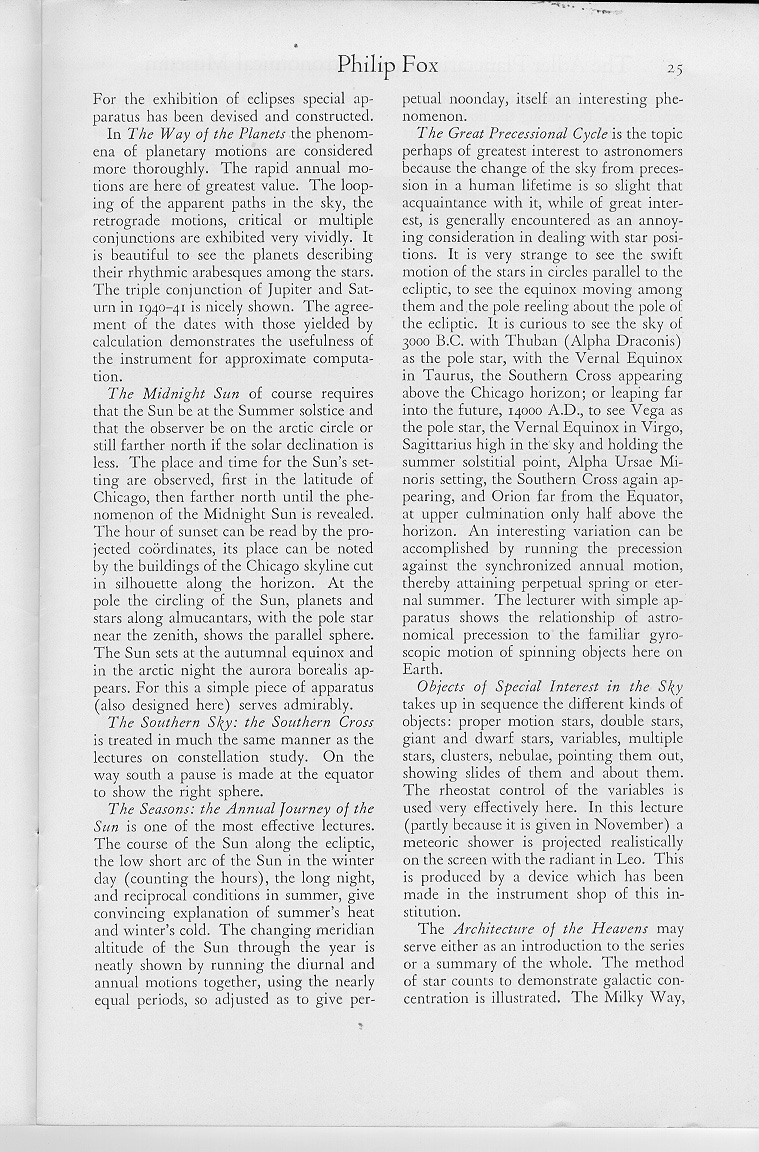
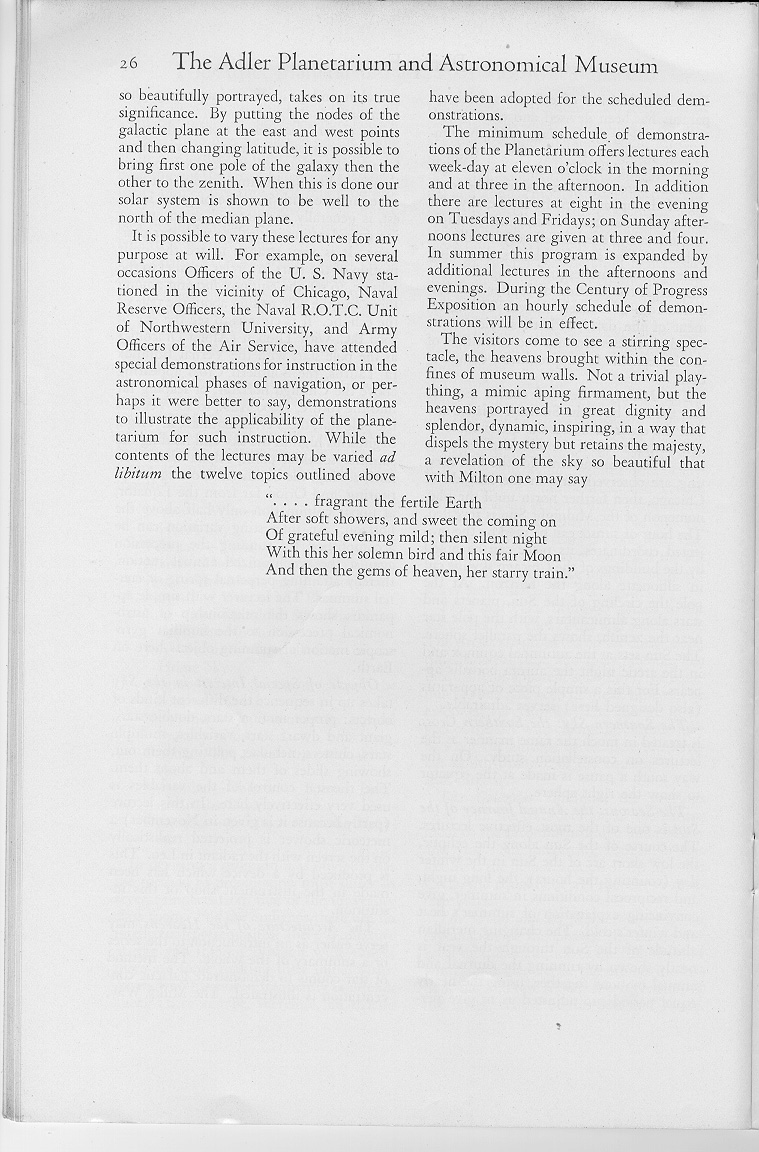
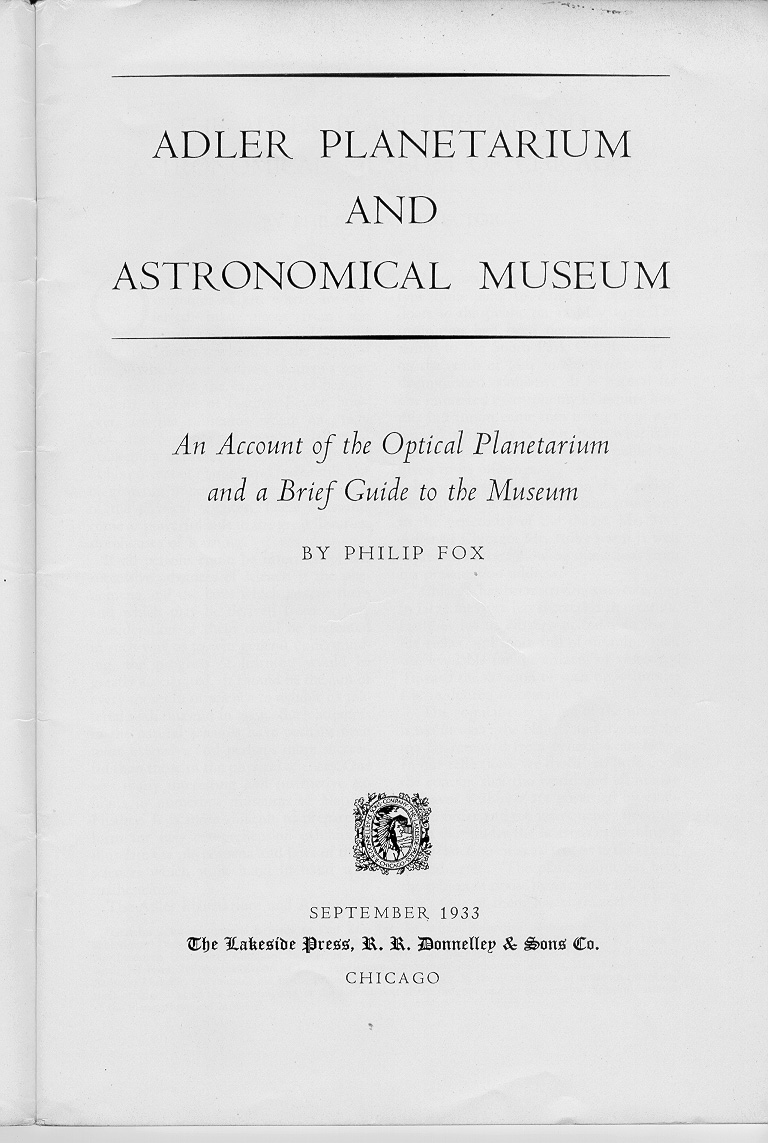
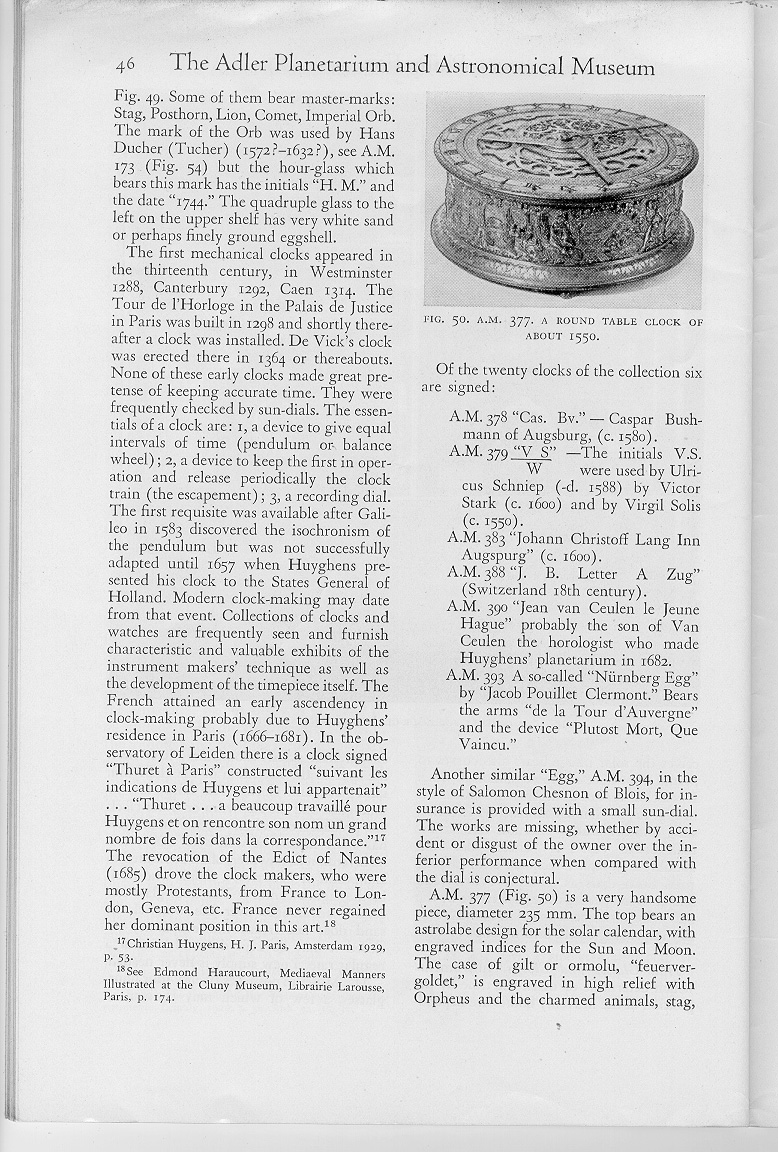
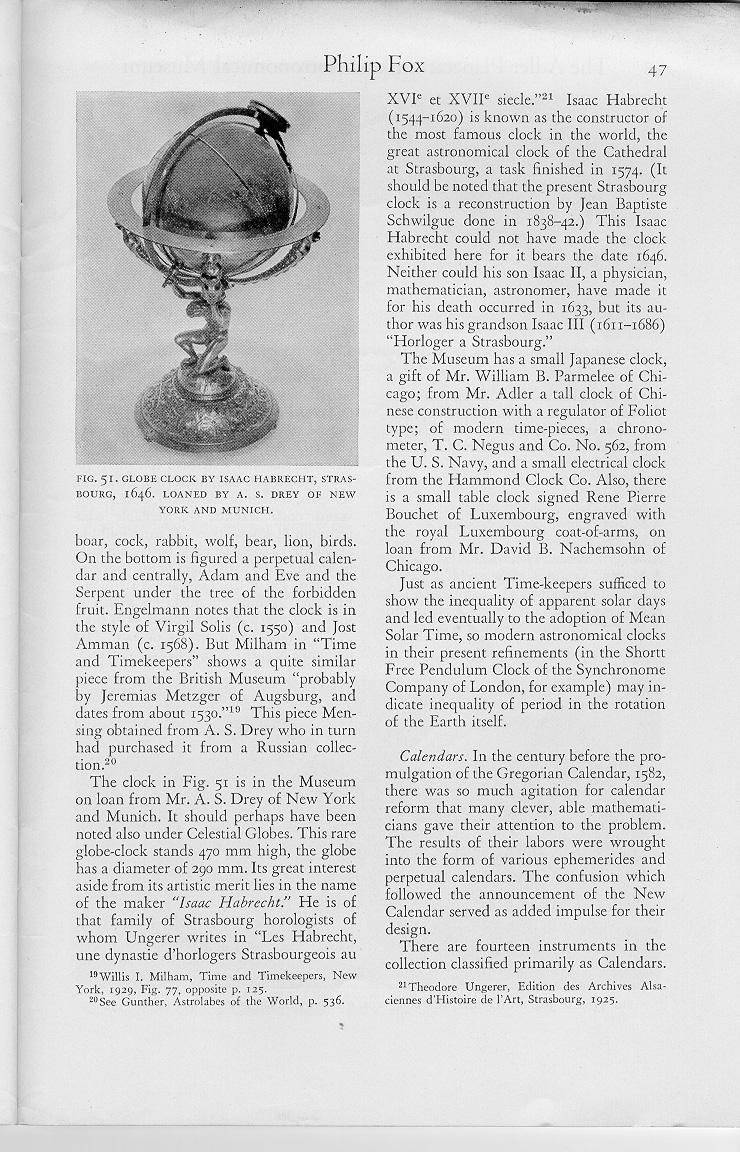
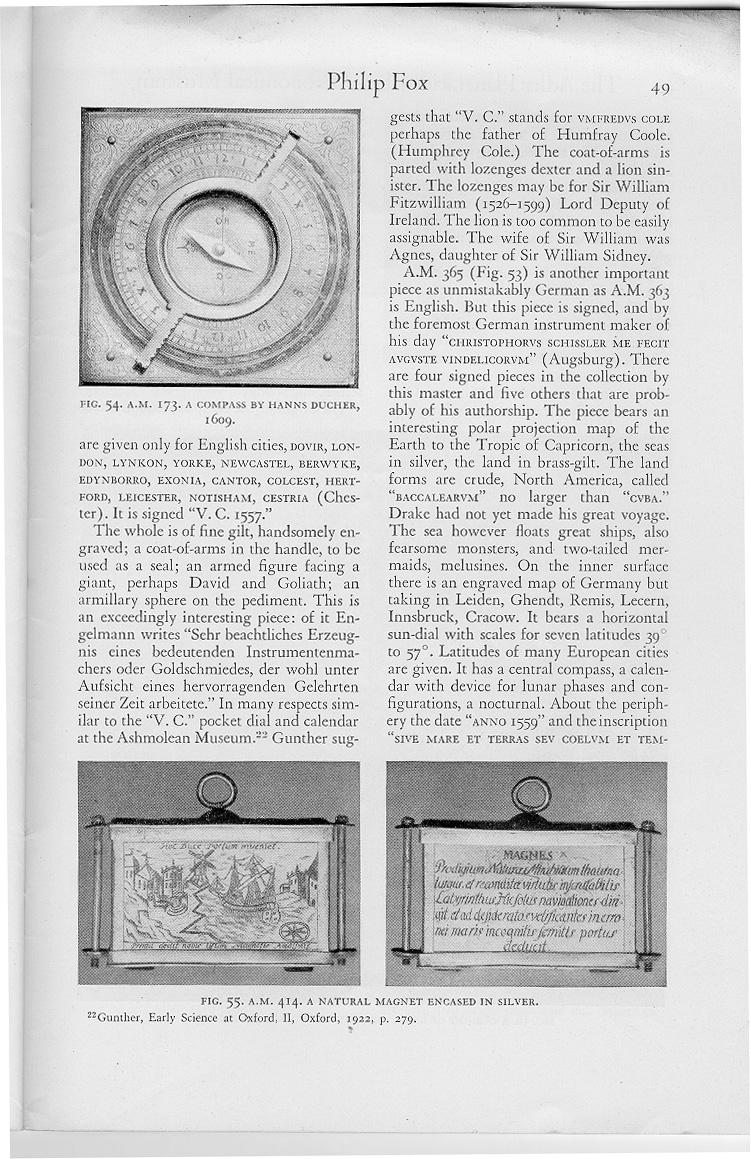
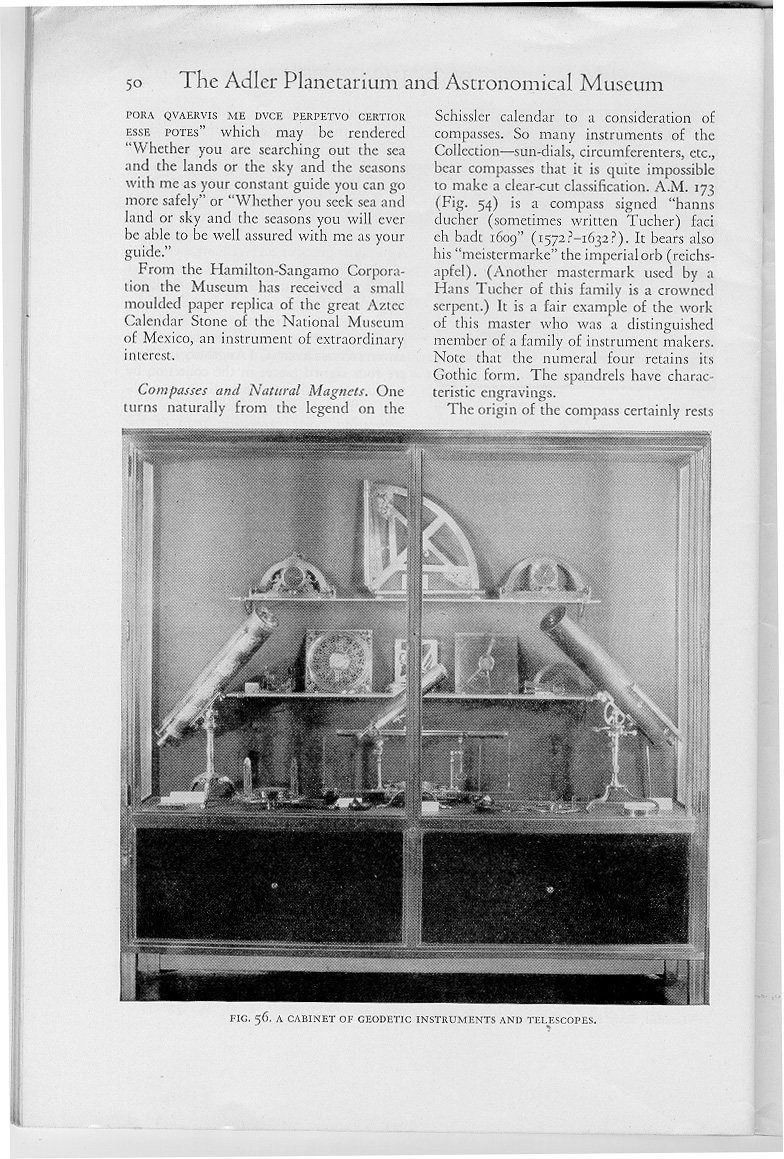
* 1933 Book:
Adler Planetarium and Astronomical Museum,
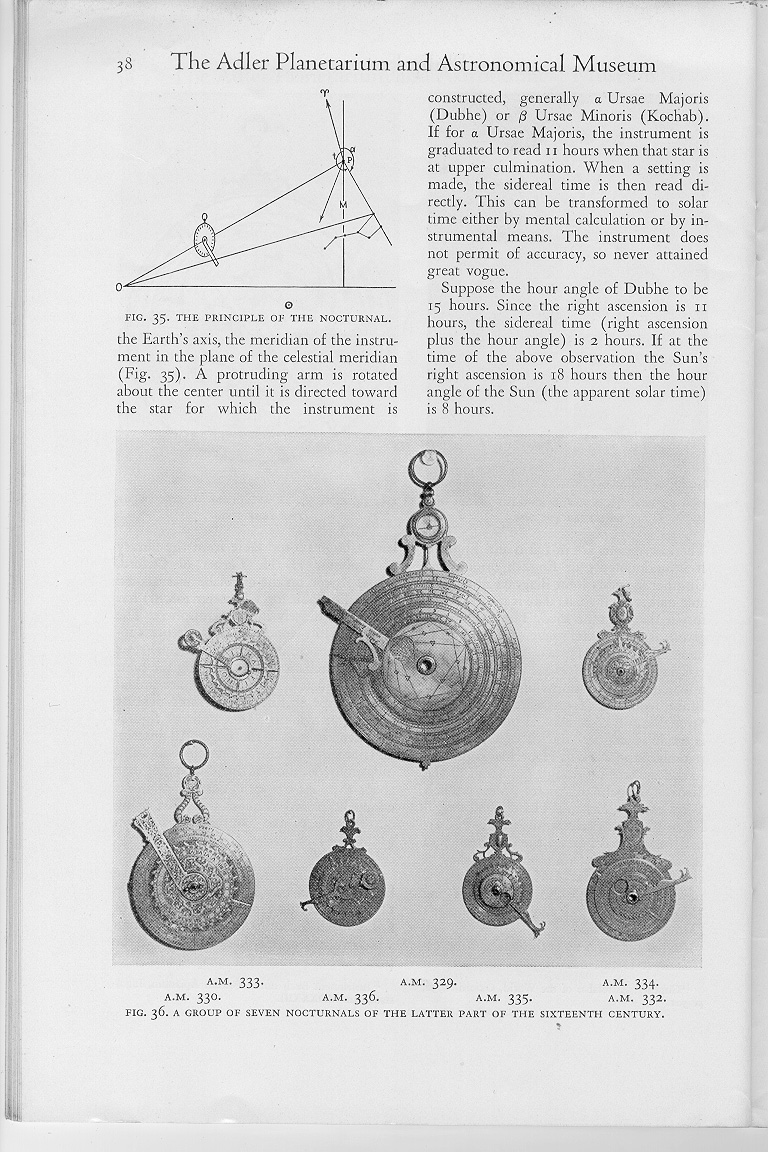
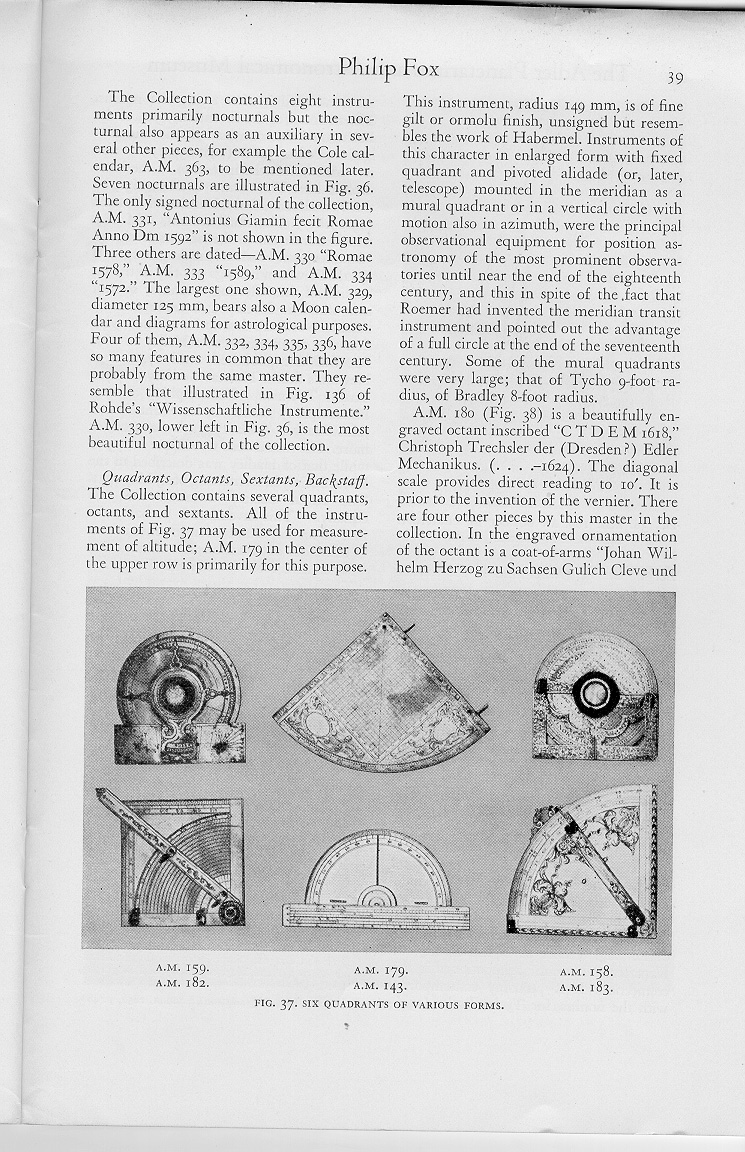
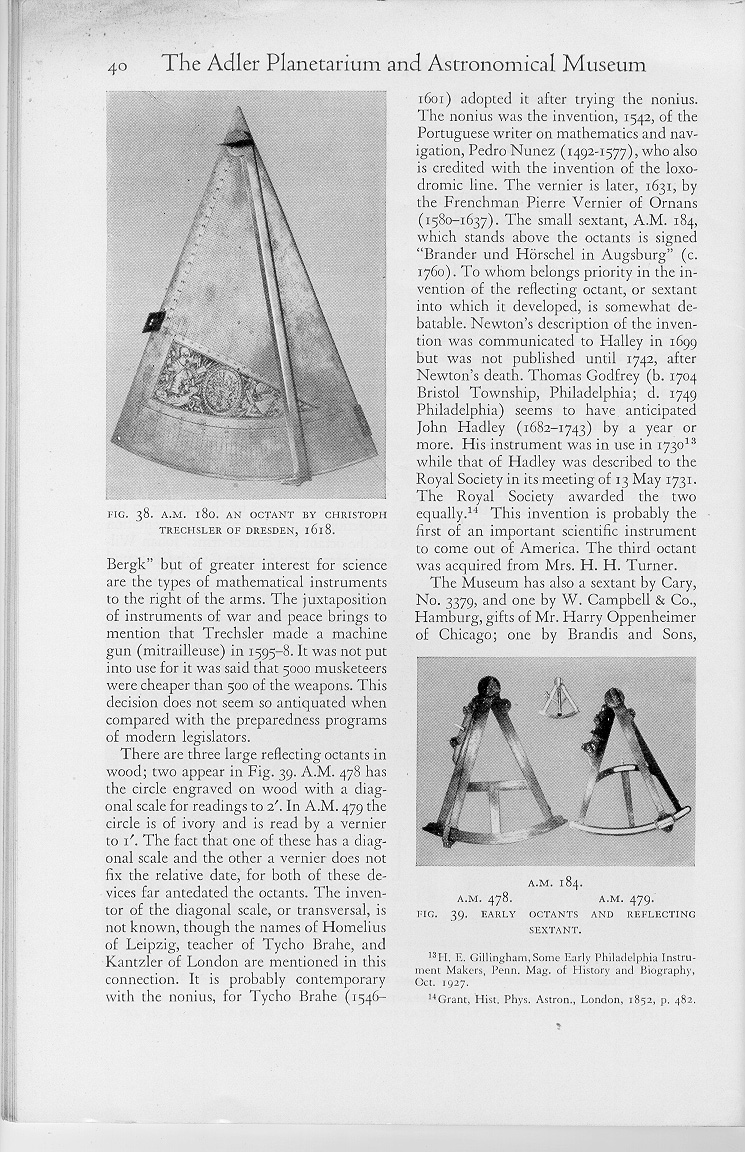
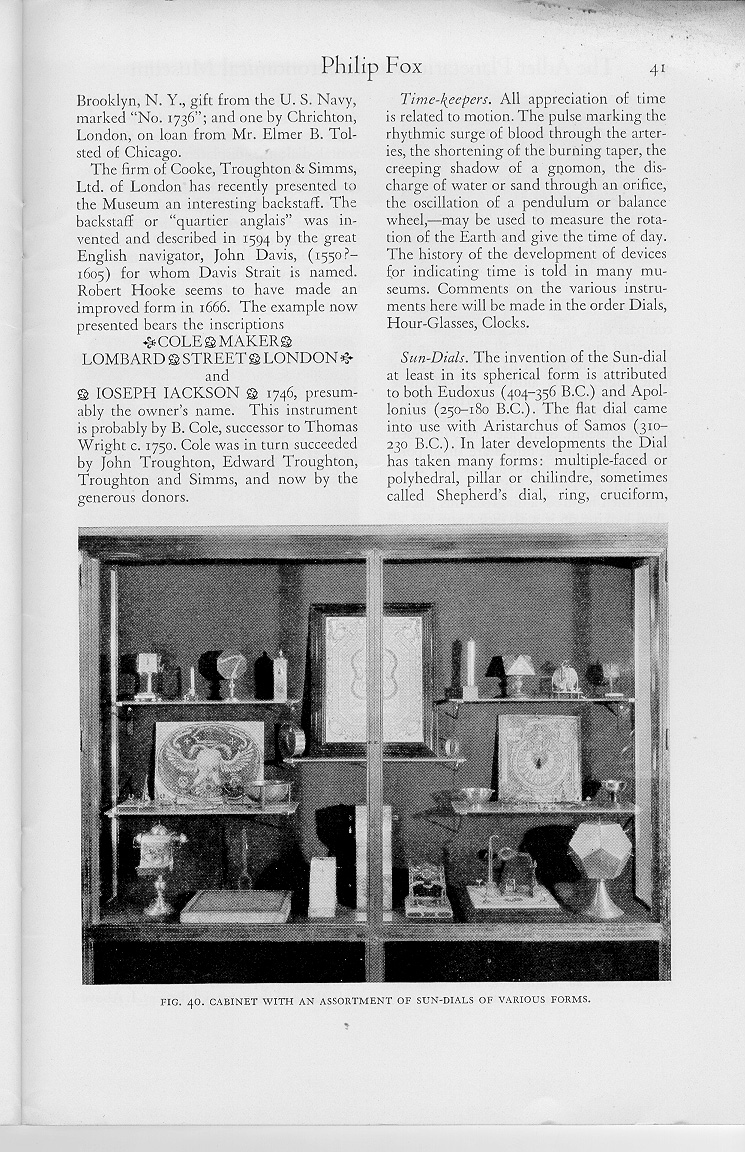
An Account of the Optical Planetarium and a Brief Guide to the Museum By Philip Fox
* First Director of Adler Planetarium: Philip Fox
*
The Buhl Planetarium and Institute of Popular Science, Pittsburgh - Inspired by Adler Planetarium
* First Buhl Planetarium Lecturer (who visited Adler Planetarium in 1930):
Leo Scanlon
*
Other Planetarium History Links
Adler Planetarium News
Graney, Christopher M.
"Oldest U.S. Planetarium Projector Found & Recovered." Blog-Post: Re-Print of SpaceWatchtower Blog-Post.
Sacred Space Astronomy (Vatican Observatory Foundation) 2020 November 14. First retrieved 2020 November 15.
Walsh, Glenn A.
"Mystery Solved! Oldest U.S. Planetarium Projector Found & Recovered." Blog-Post.
SpaceWatchtower 2020 Sept. 18. First retrieved 2020 Sept. 18.
A 50-year mystery has been solved! America's oldest planetarium projector, the Zeiss II / III Planetarium Projector operated
at Chicago's Adler Planetarium from 1930 to 1969, has been found and recovered.
About 20 years ago, planetarium historians Glenn A. Walsh and Brent Sullivan, with assistance from Gary Lazich, started
looking for Adler's historic Zeiss II / III Planetarium Projector. Through research, including telephone and electronic mail
interviews with people who had involvement with the Adler Zeiss Projector, a narrative started to be assembled showing
what may have happened to the projector...
In 1935, the Buhl Foundation (then, the nation's 13th largest philanthropic foundation) announced that they would build a
planetarium in memory of Henry Buhl, Jr., who had owned one of Pittsburgh's major department stores, Boggs and Buhl.
The Buhl Planetarium and Institute of Popular Science opened in 1939. AAAP co-founder Leo Scanlon (who, in November
of 1930, had constructed the world's first all-aluminum astronomical observatory dome) was one of the first two Buhl
Planetarium lecturers.
Walsh, Glenn A.
"Mystery Solved! Oldest U.S. Planetarium Projector Found & Recovered." Blog-Post.
SpaceWatchtower 2020 Sept. 18. First retrieved 2020 Sept. 18.
A 50-year mystery has been solved! America's oldest planetarium projector, the Zeiss II / III Planetarium Projector operated at Chicago's Adler Planetarium from 1930 to 1969, has been found and recovered.
About 20 years ago, planetarium historians Glenn A. Walsh and Brent Sullivan, with assistance from Gary Lazich, started looking for Adler's historic Zeiss II / III Planetarium Projector. Through research, including telephone and electronic mail interviews with people who had involvement with the Adler Zeiss Projector, a narrative started to be assembled showing what may have happened to the projector...
In 1935, the Buhl Foundation (then, the nation's 13th largest philanthropic foundation) announced that they would build a planetarium in memory of Henry Buhl, Jr., who had owned one of Pittsburgh's major department stores, Boggs and Buhl. The Buhl Planetarium and Institute of Popular Science opened in 1939. AAAP co-founder Leo Scanlon (who, in November of 1930, had constructed the world's first all-aluminum astronomical observatory dome) was one of the first two Buhl Planetarium lecturers.
Gillers, Heather.
"Adler Planetarium lays off 8 percent of staff."
Chicago Tribune 2013 May 31.
Johnson, Steve.
"Countdown to 'wow'."
Chicago Tribune 2011 June 21.
Revamped Sky Theater boasts the world's highest-resolution projection system — and a new show designers are racing to finish.
Barrett, Joe.
"Planetarium Stars Again After Revamp."
The Wall Street Journal 2011 June 20.
Chicago's 81-Year-Old Facility Gets $14 Million Makeover.
Bush, Lawrence.
"May 10: The First Planetarium." Blog Posting.
Jewish Currents 2011 May 10.
Haberman, Clyde.
"Tickling Worms Leads to Discoveries, and a Measure of Fame."
The New York Times 2008 Nov. 27.
2008 Nobel Prize winner in Chemistry, Martin Chalfie, comments on value of science and planetaria:
Like many scientists, he is dismayed by how the Bush administration has pushed science to a back burner so distant that it is barely on the stove. Budgets for research have shrunk. “Ideology,” he said, “plays a role instead of scientific information.” Though he feels that Senator John McCain is better than President Bush in this regard, he also finds Mr. McCain overly eager to bash science.
Take the campaign attacks on Mr. Obama’s attempt to get $3 million in federal funds for “an overhead projector,” as Mr. McCain called it, for a Chicago planetarium. You’d have thought from his stump speech that this was a projector for showing home movies.
“To me this was a prime example of belittling science and particularly science education,” Dr. Chalfie said. A planetarium projector is complex and, naturally, expensive. “It’s to learn about astronomy,” he said. “It was a tool for the support of science education, and a very important one.”
"Official Statement on the Role of Planetariums in Education."
International Planetarium Society 2008 October.
Zentner, Andrew R.
"About that 'projector'." Letter-to-the-Editor.
Pittsburgh Post-Gazette 2008 Oct. 15.
(Fourth letter of six on web page)
Mullen, William and James Janega.
"Adler device not just 'overhead projector'."
Chicago Tribune 2008 Oct. 9.
Herrmann, Andrew.
"Adler president to McCain: Sky machine not an overhead projector."
Chicago Sun-Times 2008 Oct. 9.
"Planetarium president defends Obama ``earmark''"
Chicago Tribune On-Line/AP 2008 Oct. 9.
"Don't mess with scientists."
Yahoo 2008 Oct. 9.
Sweitzer, Jim.
"John McCain Calling Planetaria 'Foolishness' During Debates Is Foolish."
Discovery Channel On-Line 2008 Oct. 8.
Adler Planetarium.
"STATEMENT ABOUT SENATOR JOHN McCAIN’S
COMMENTS AT THE PRESIDENTIAL DEBATE."
Public Statement.
Adler Planetarium and Astronomy Museum, Chicago 2008 Oct. 8.
"Chicago's Adler Planetarium projector stirs campaign controversy."
Chicago Tribune On-Line 2008 Oct. 8.
Janega, James.
"Planetarium on defense after McCain criticism."
Chicago Tribune On-Line 2008 Oct. 8.
"Adler's gear no ordinary projector."
Chicago Tribune On-Line/AP 2008 Oct. 8.
Sneed, Michael.
"McCain at his best talking national security
MARS VS. VENUS | McCain at his best talking national security.
Chicago Sun-Times 2008 Oct. 8.
"Facts, half-truths and some downright falsehoods."
Baltimore Sun/AP 2008 Oct. 8.
McCormick, John and Jill Zuckman.
"Fire and Ice
In second debate, chill between candidates warmed only by
McCain's and Obama's heated attacks on each other."
The Morning Call, Allentown PA 2008 Oct. 8.
McCormick, John and Jill Zuckman.
"McCain, Obama clash."
Chicago Tribune On-Line 2008 Oct. 7.
"NASA And The Adler Planetarium Host NASA Future Forum In Chicago."
NASA 2008 Oct. 6.
Farrington, Brendan.
"McCain says Obama didn't call Palin a pig."
Yahoo/AP 2008 Sept. 15.
Includes the statement by Senator McCain, regarding Senator Obama:
"And when you look at some of the planetariums and other foolishness that
he asked for, he shouldn't be saying anything about Governor Palin."
Rothstein, Edward.
"Planetarium Review, Looking at the Stars From Angles Old and New."
The New York Times 2008 Feb. 16.
Regarding Adler Planetarium, Chicago.
Menke, David H.
"Phillip Fox and the Adler Planetarium."
The Planetarian 1987 Januzry.
Fox, Philip.
Adler Planetarium and Astronomical Museum,
An Account of the Optical Planetarium and a Brief Guide to the Museum.
Chicago: The Lakeside Press, R.R. Donnelley and Sons Company, 1933.
First Director of Adler Planetarium: Philip Fox
In September of 1933, the Adler Planetarium and Astronomy Museum produced
a 62-page book about the new institution, authored by the facility's
Director,
Philip Fox. The book titled, Adler Planetarium and
Astronomical Museum, An Account of the Optical Planetarium and a Brief
Guide to the Museum, was published by the Lakeside Press, R.R.
Donnelley & Sons Company of Chicago.
For more information about the author, Philip Fox:
Brief Biography ***
Geneological Information
Menke, David H.
"Phillip Fox and the Adler Planetarium."
The Planetarian 1987 Januzry.
By David H. Menke, Copernican Space Science Center,New Britain, Connecticut
[reprinted from the Planetarian, January 1987]
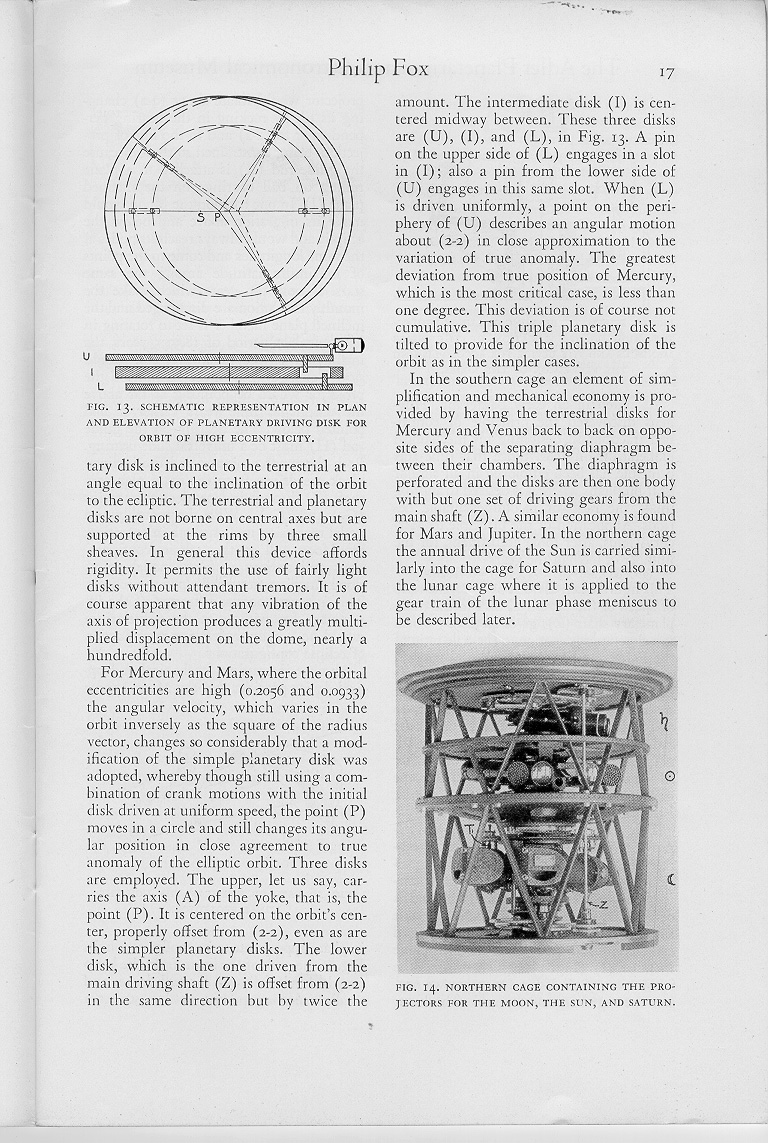
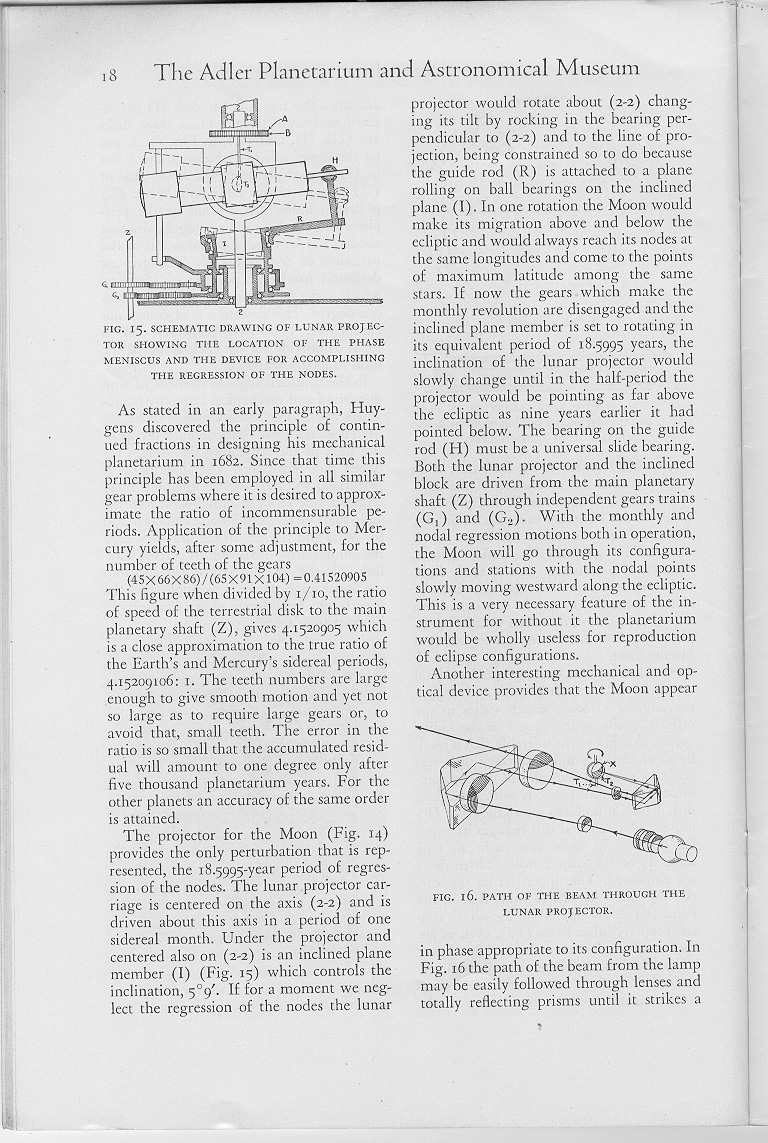
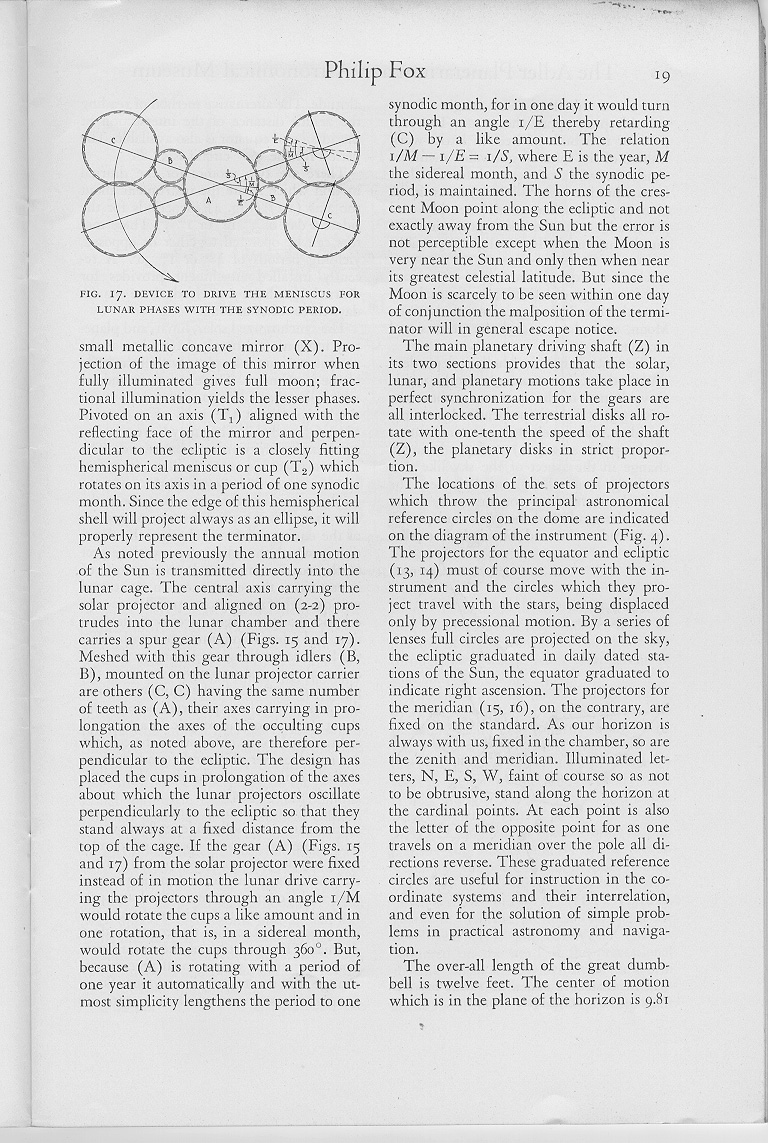
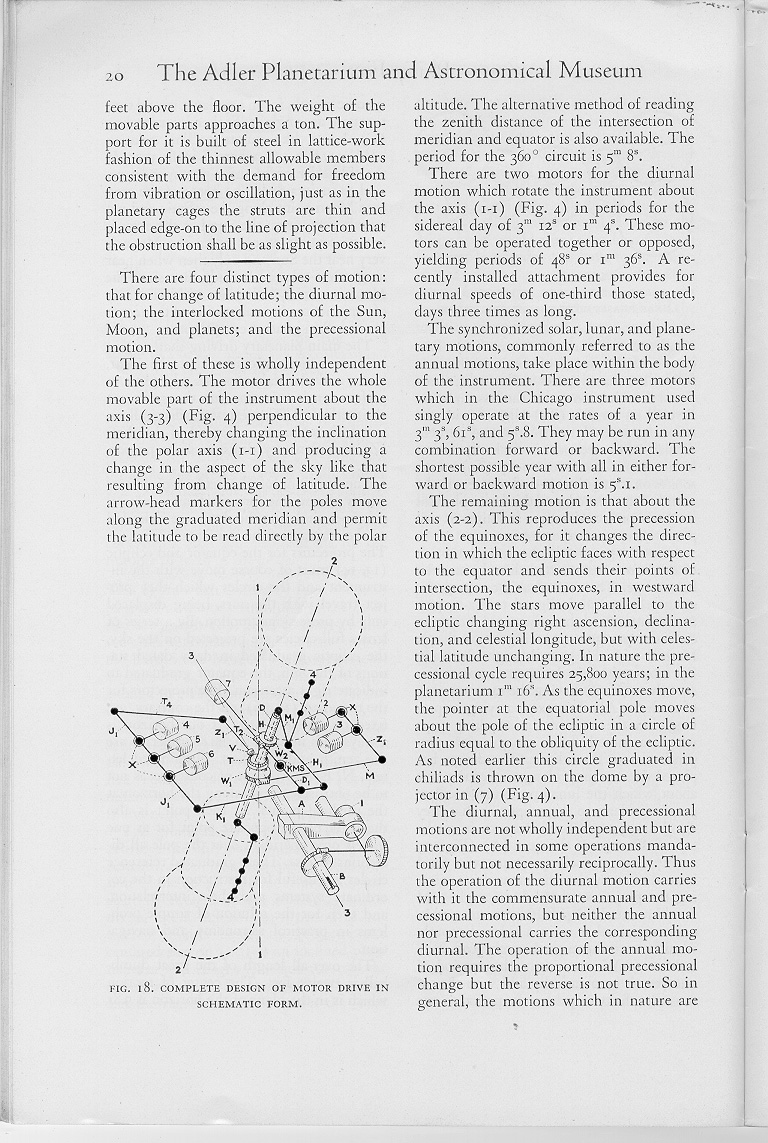
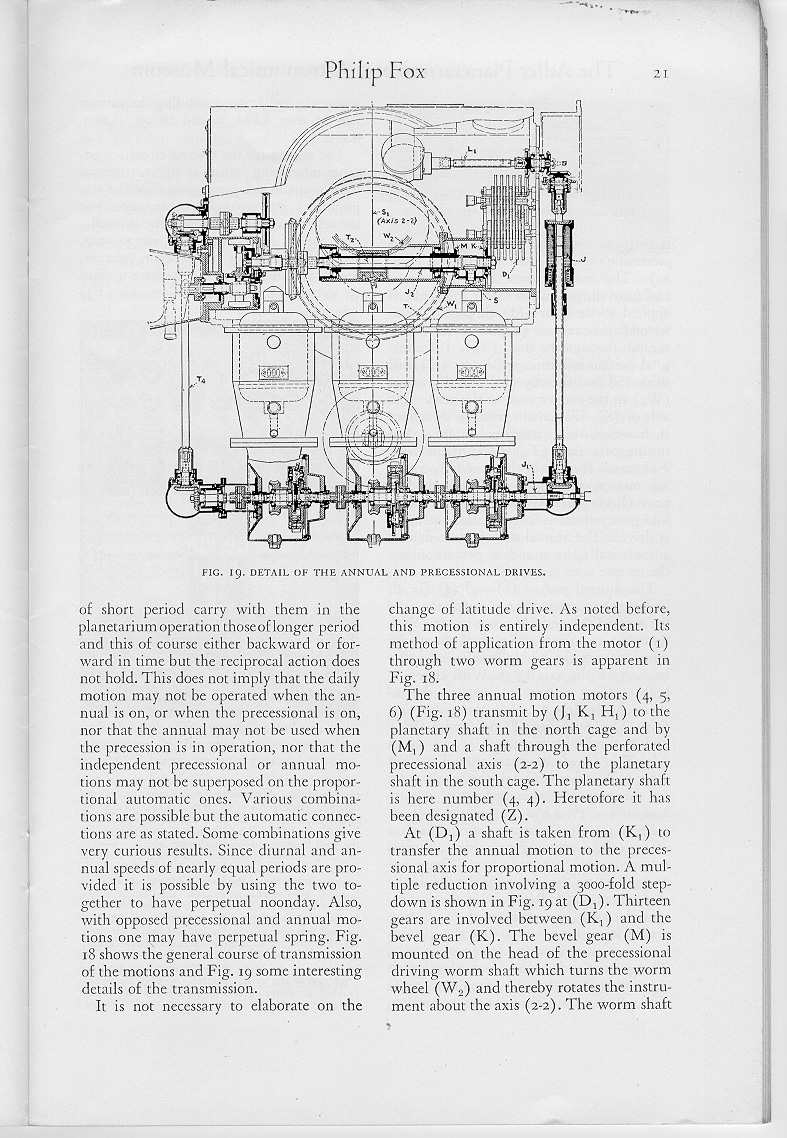
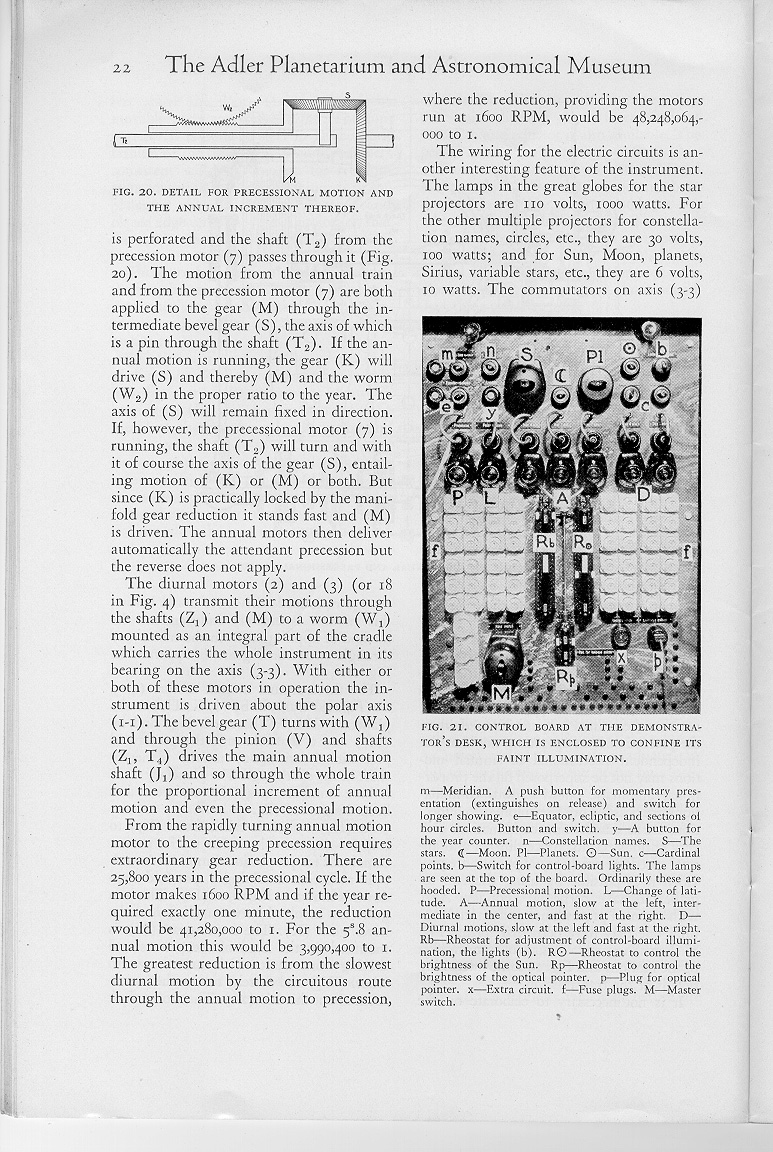
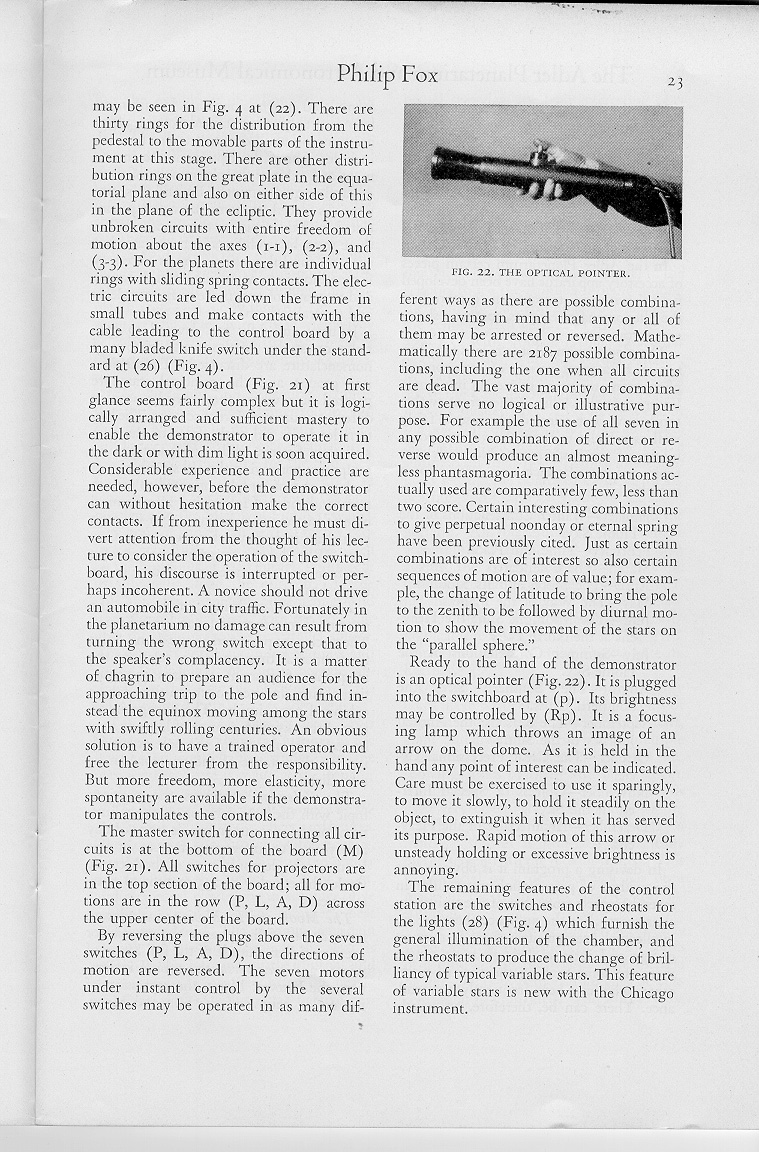
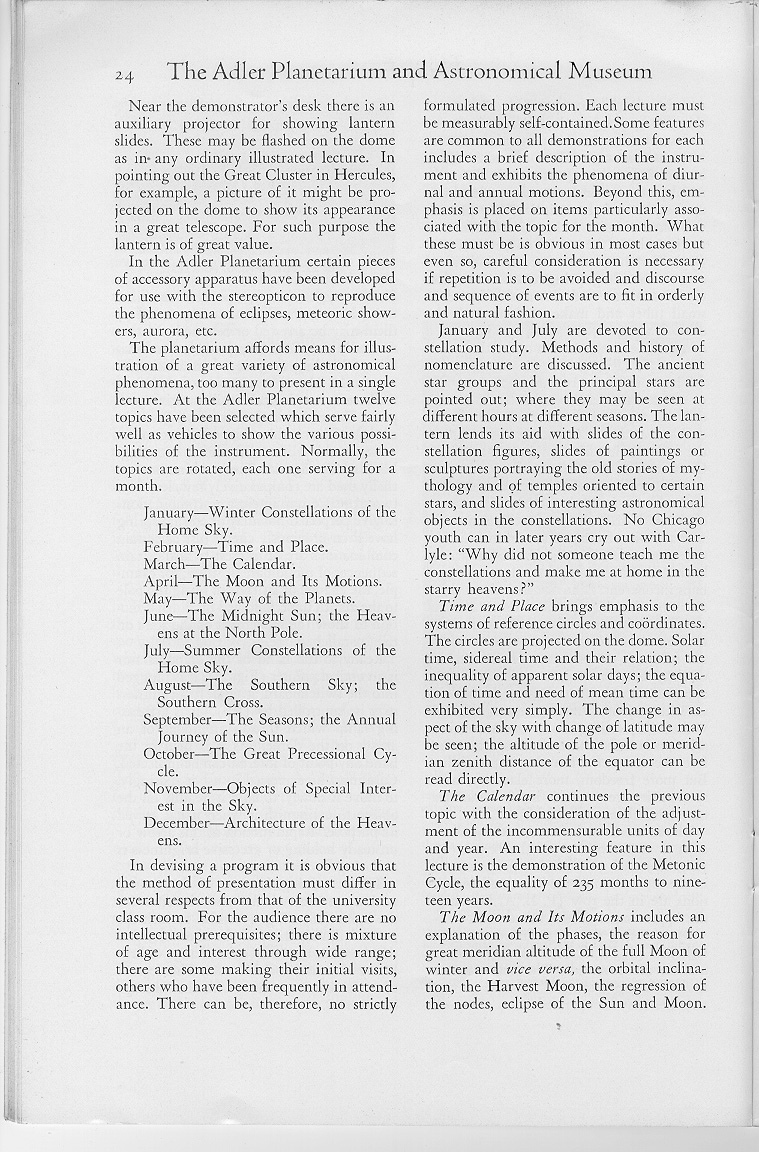
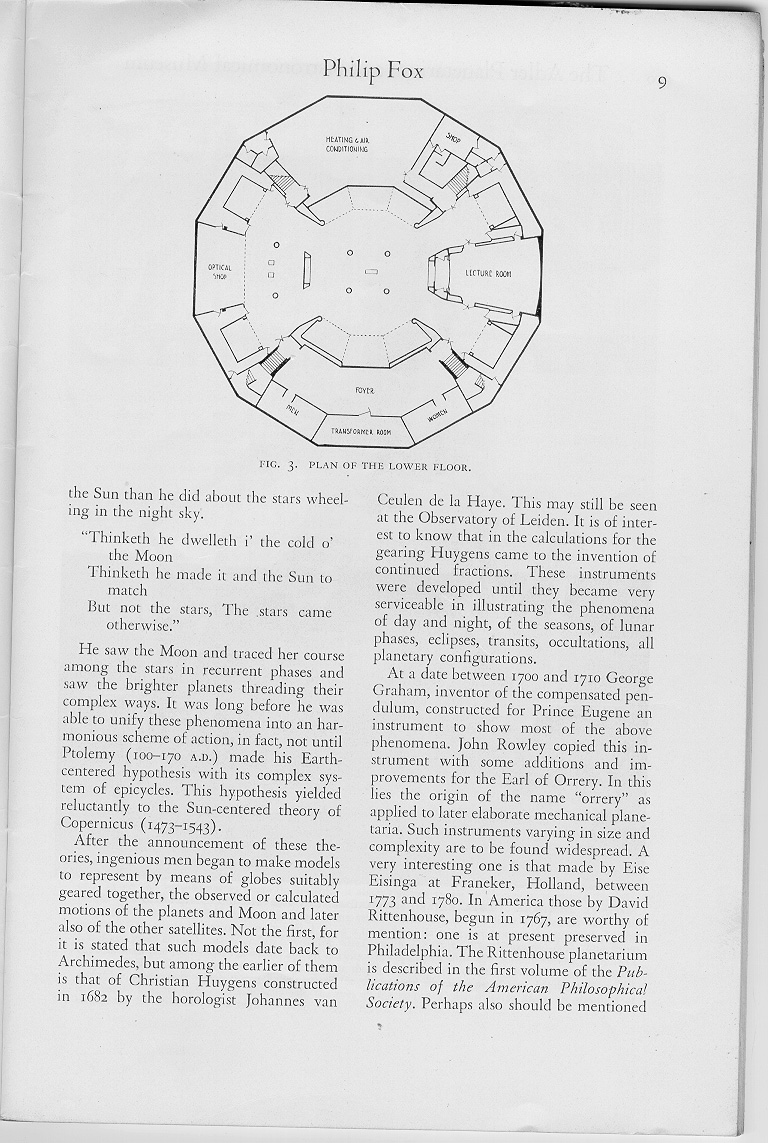
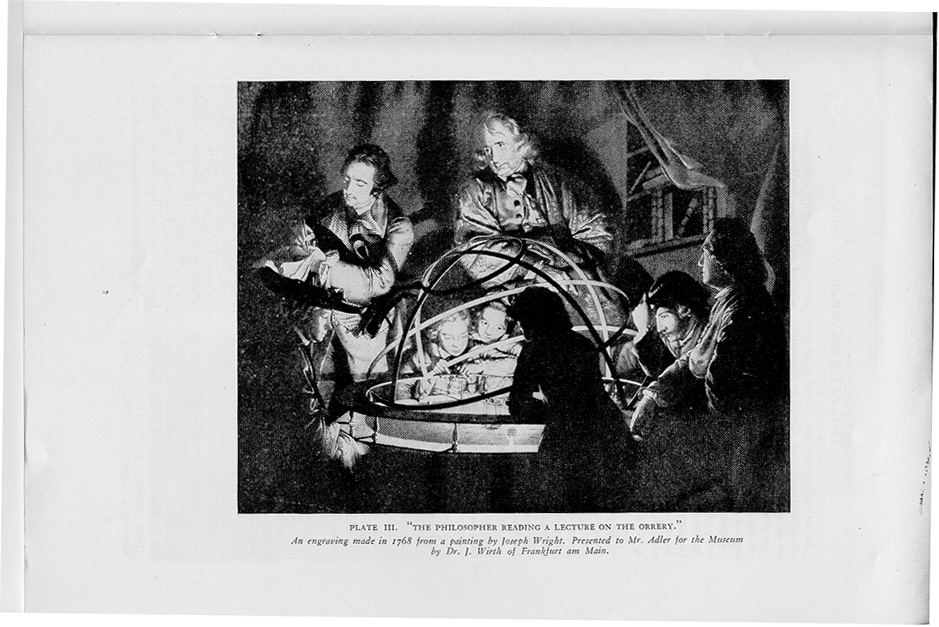
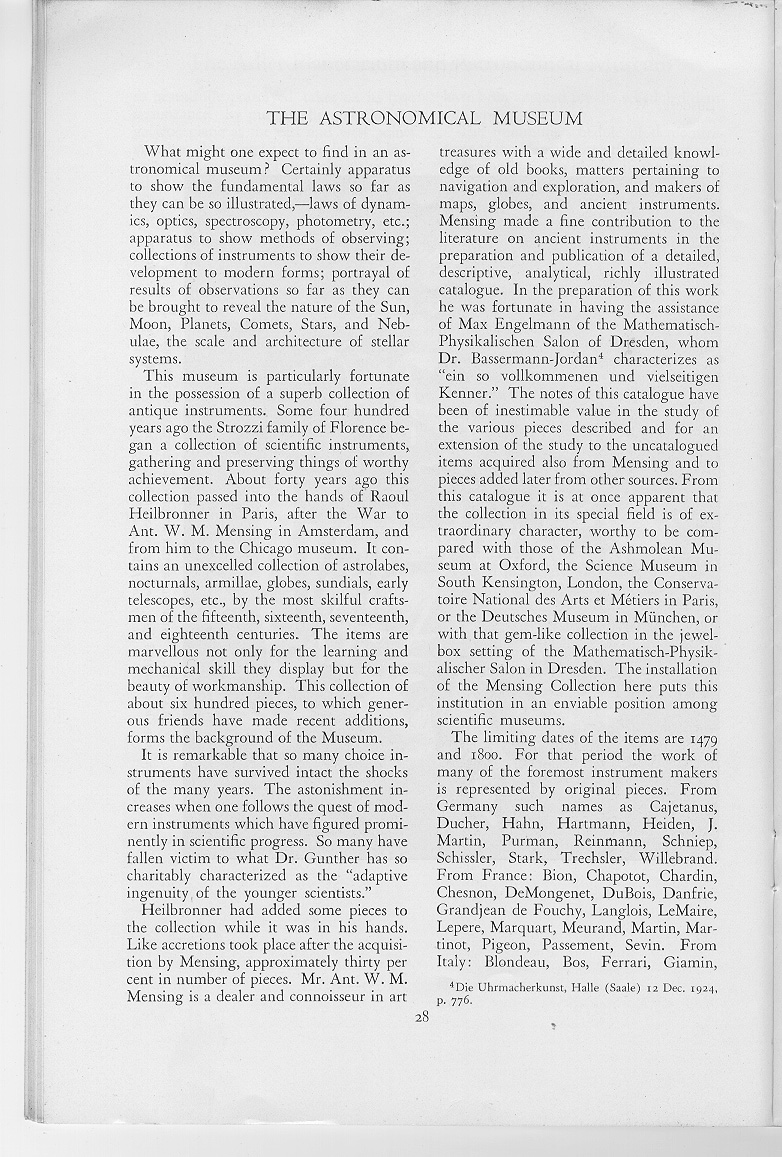
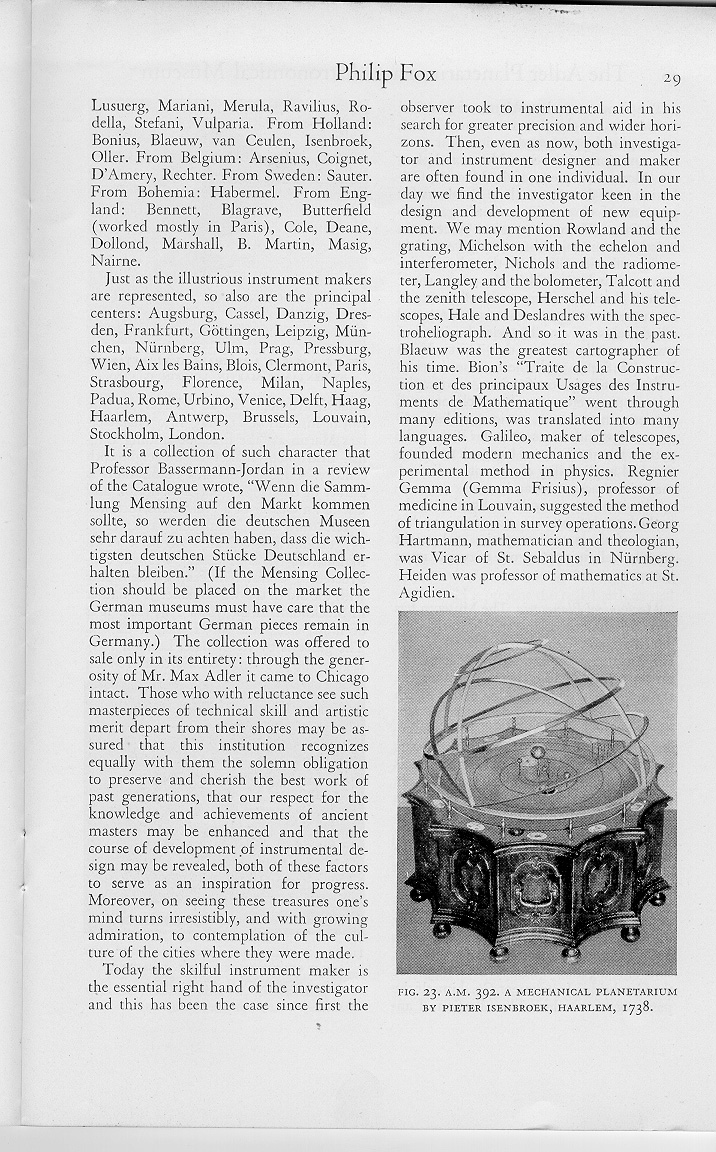
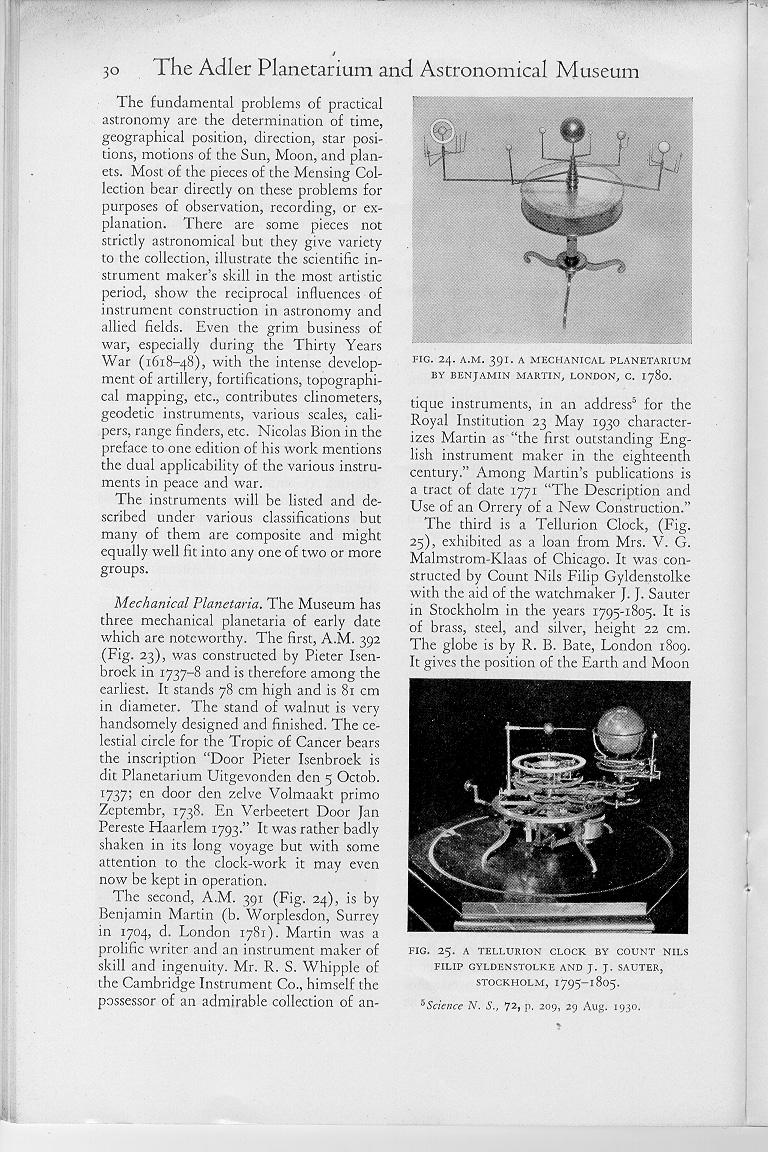
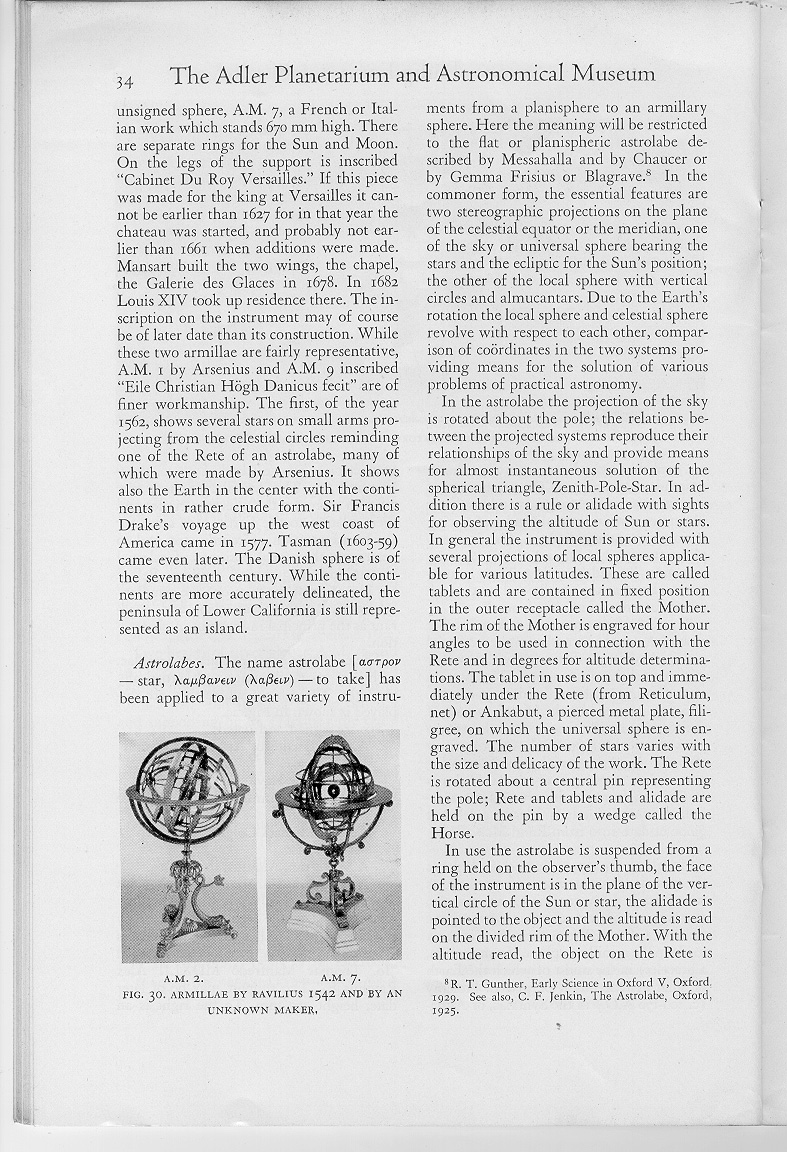
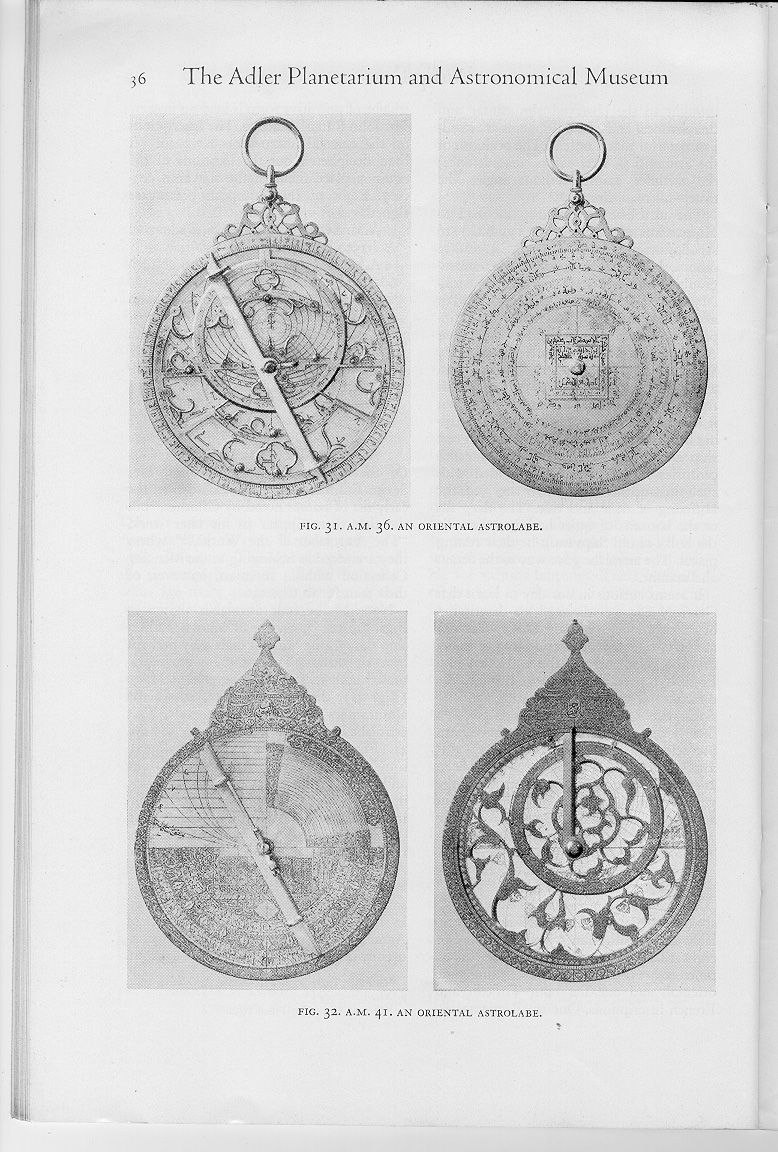
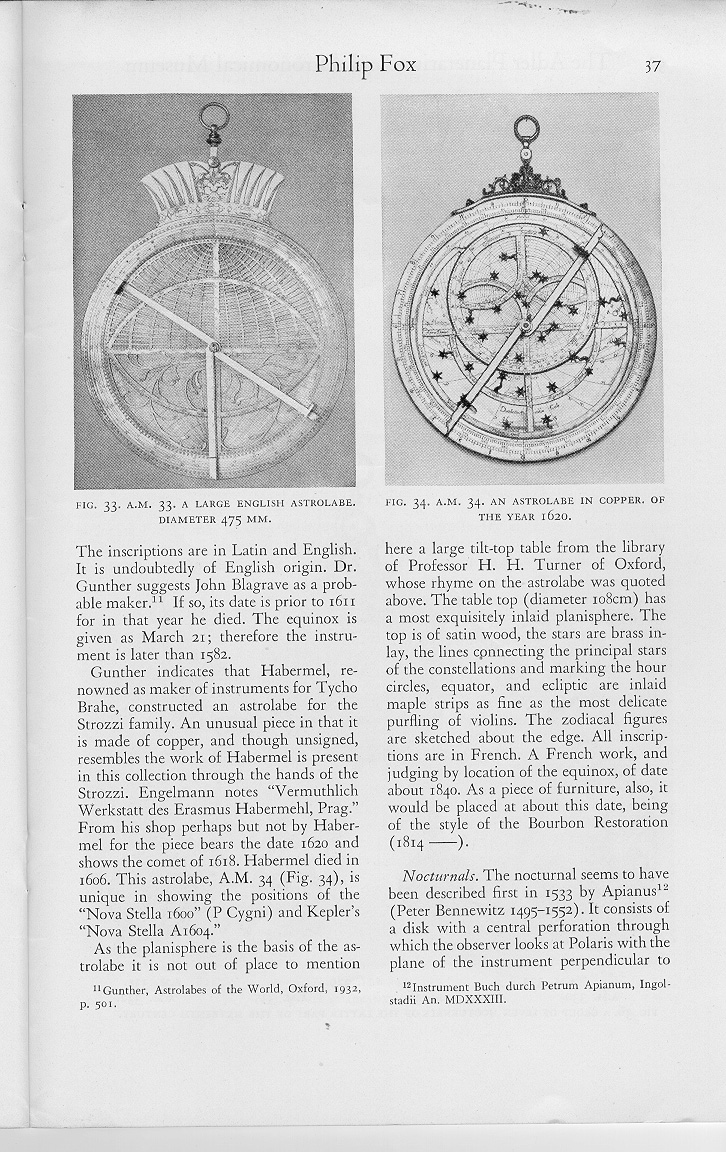
1933 Book:
Adler Planetarium and Astronomical Museum,
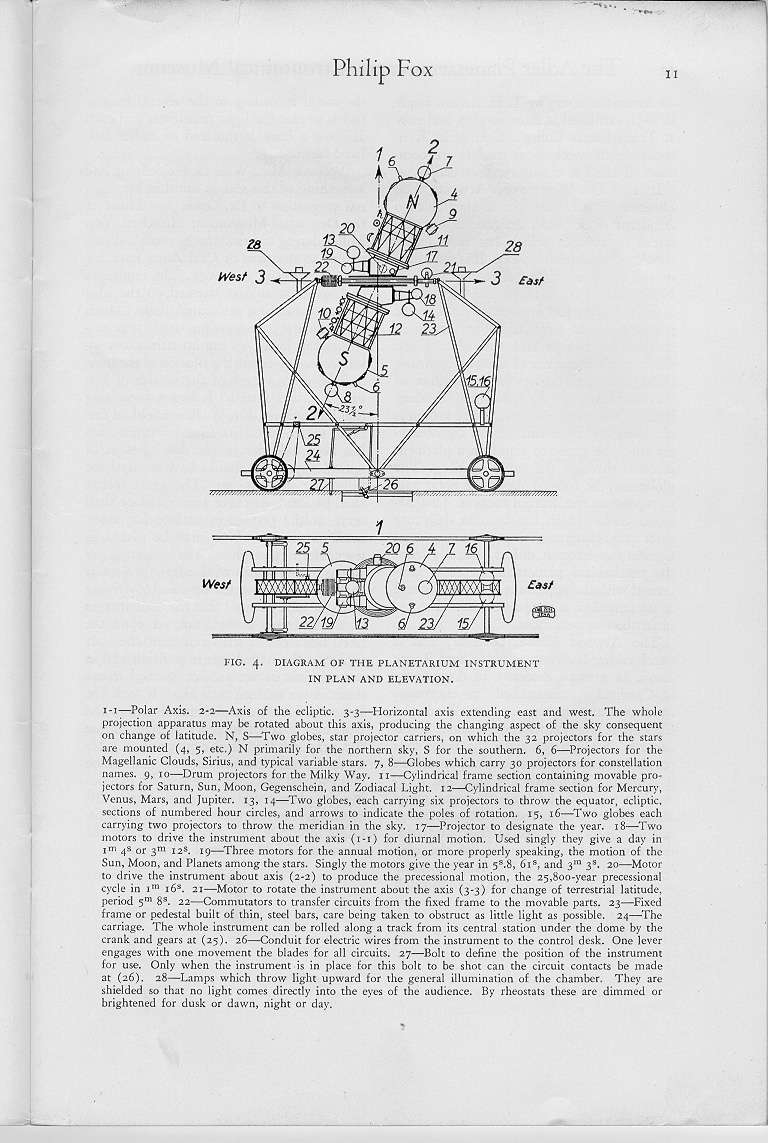
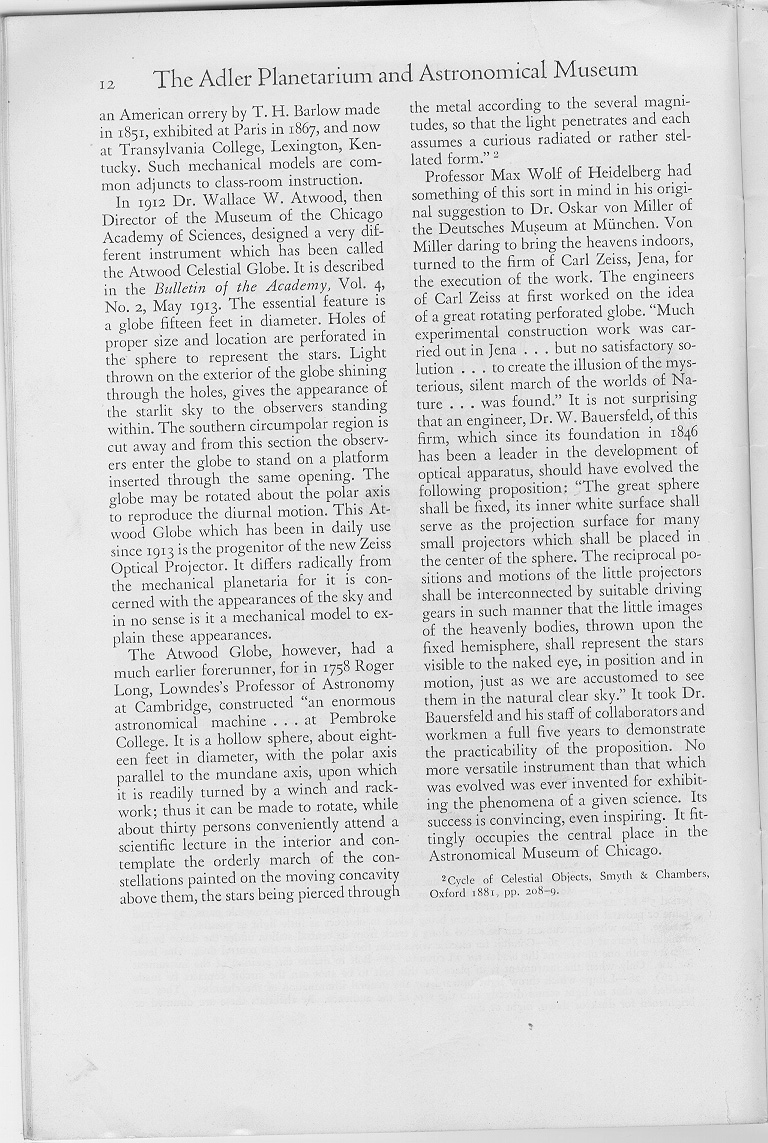
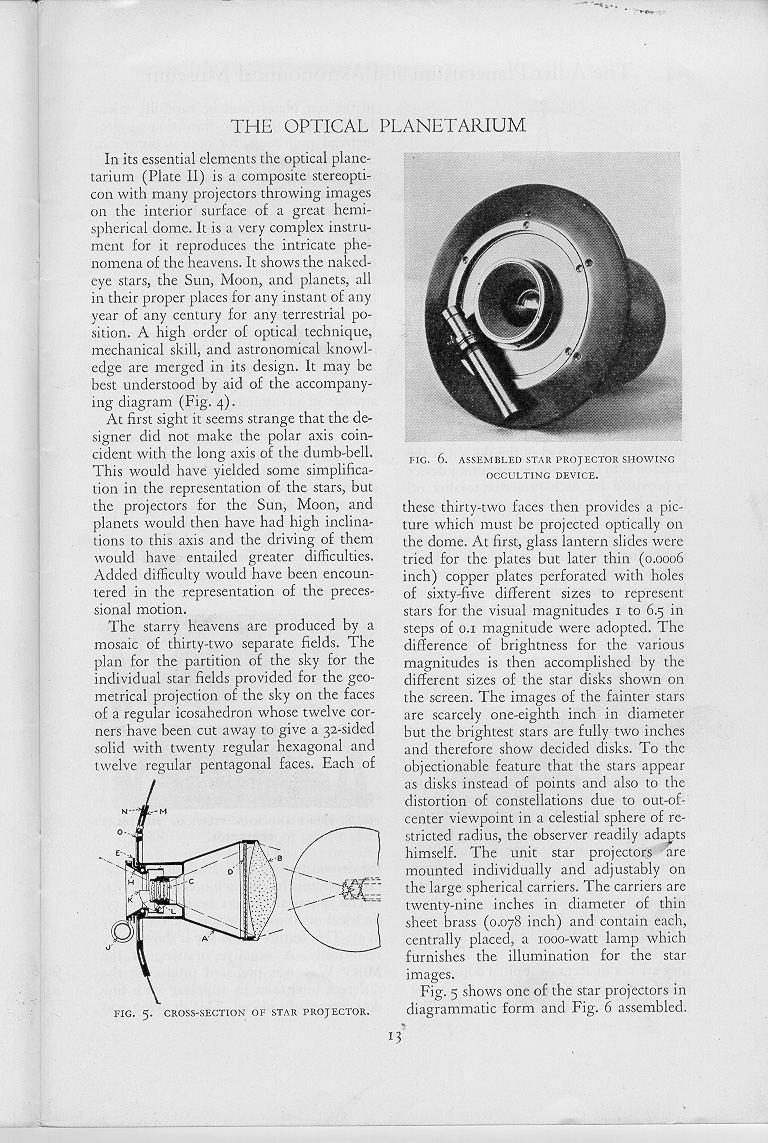
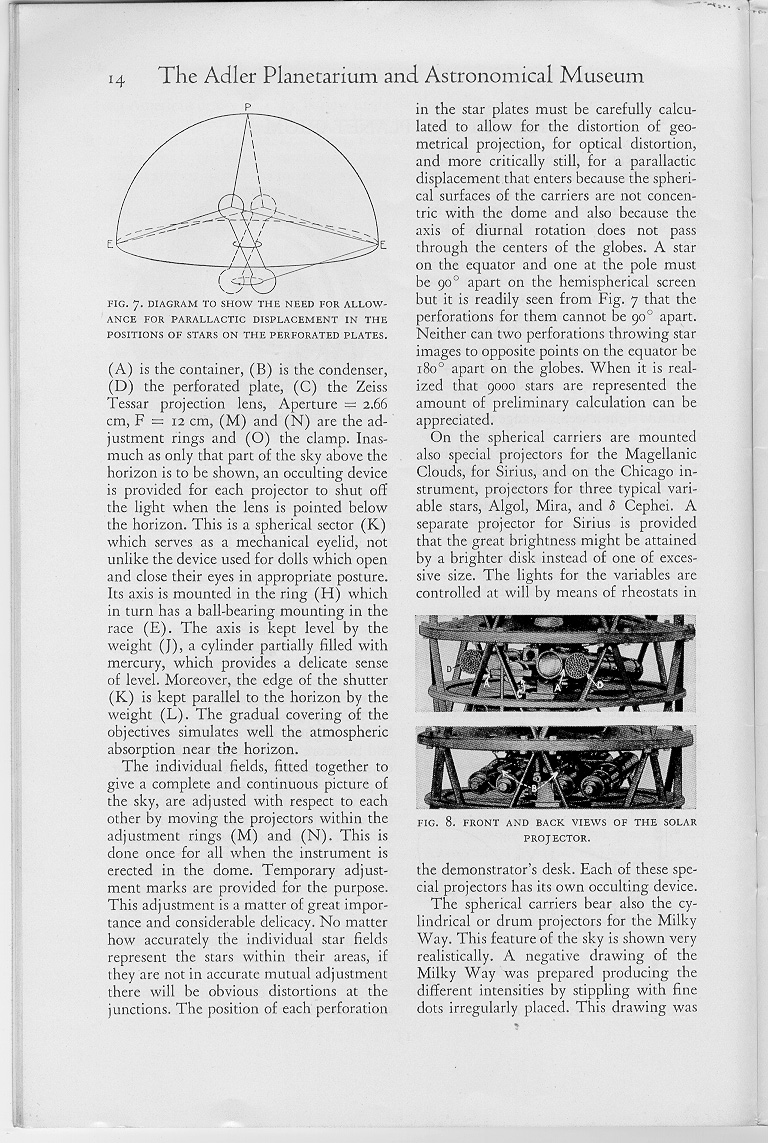
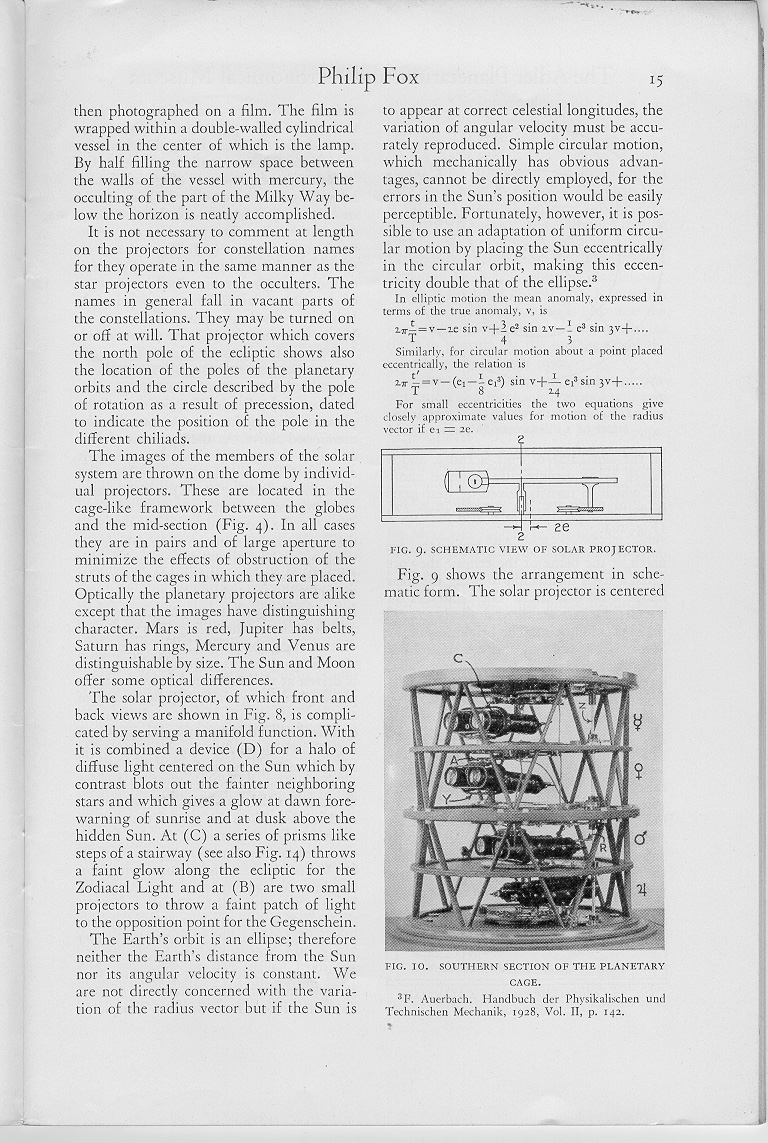
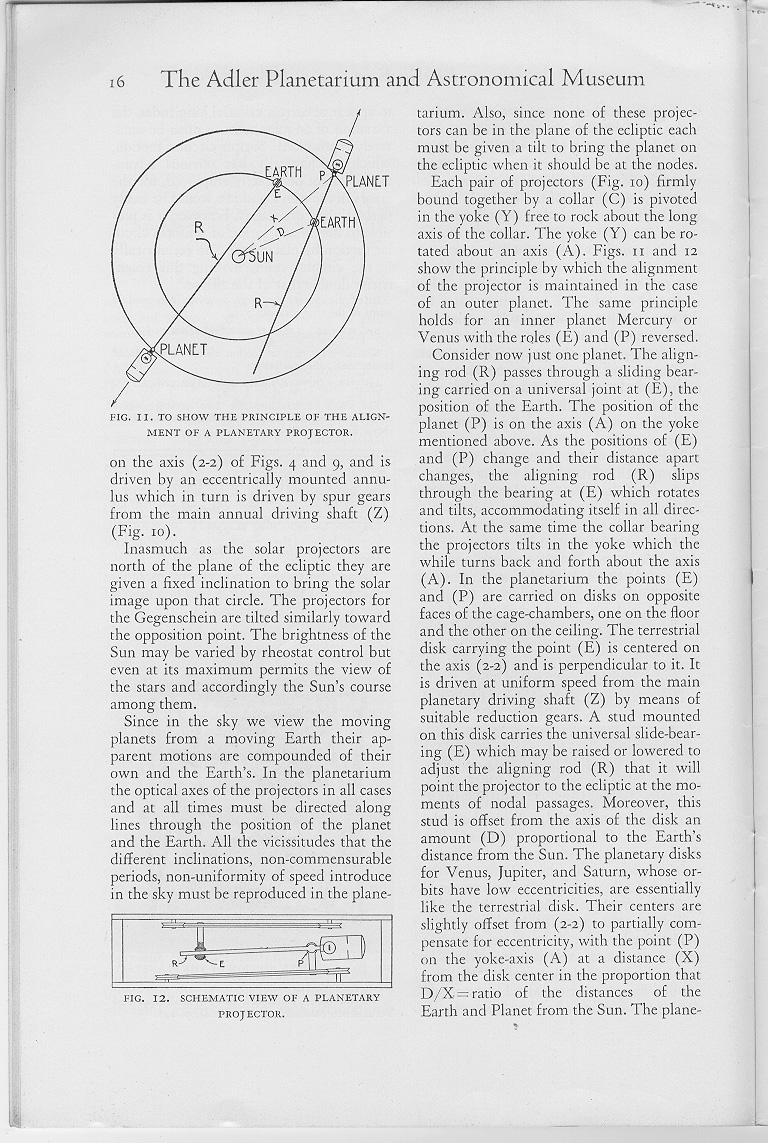
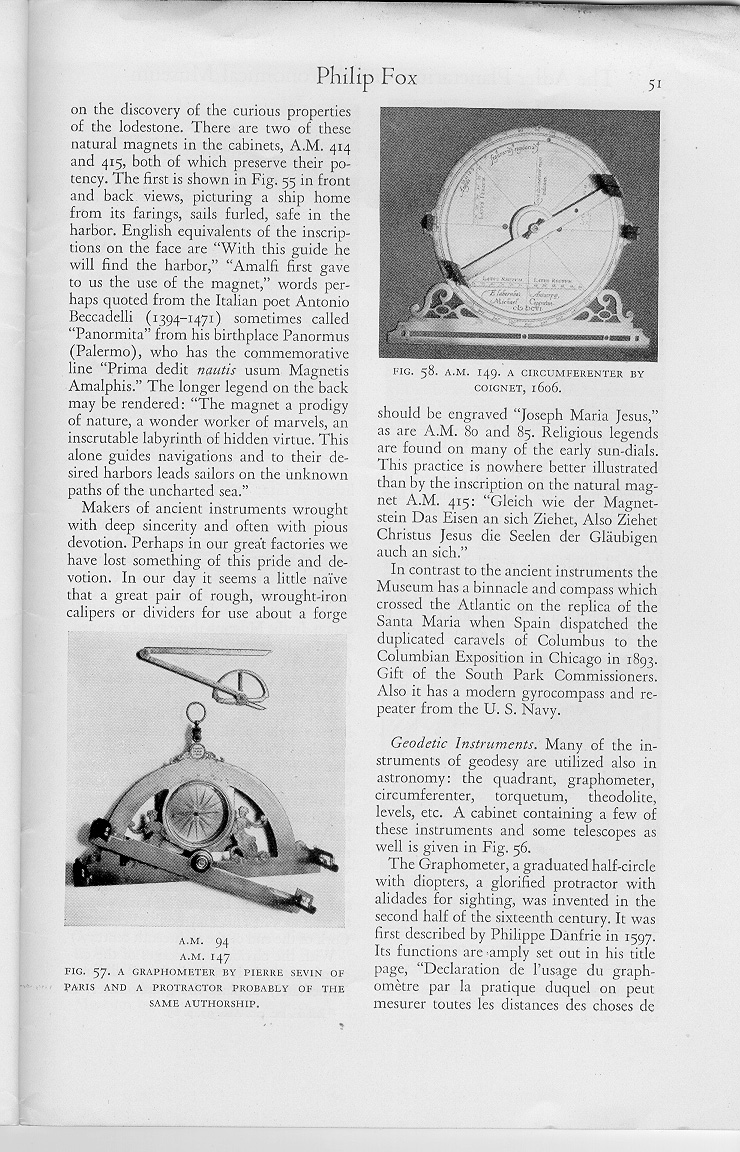
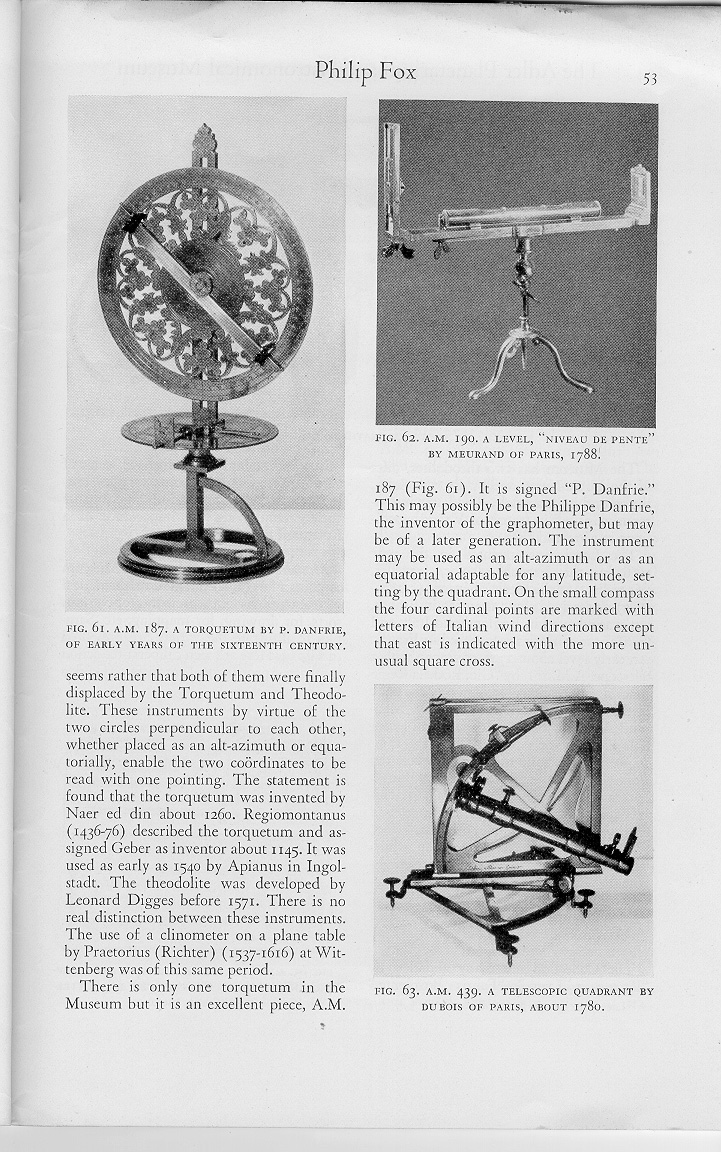
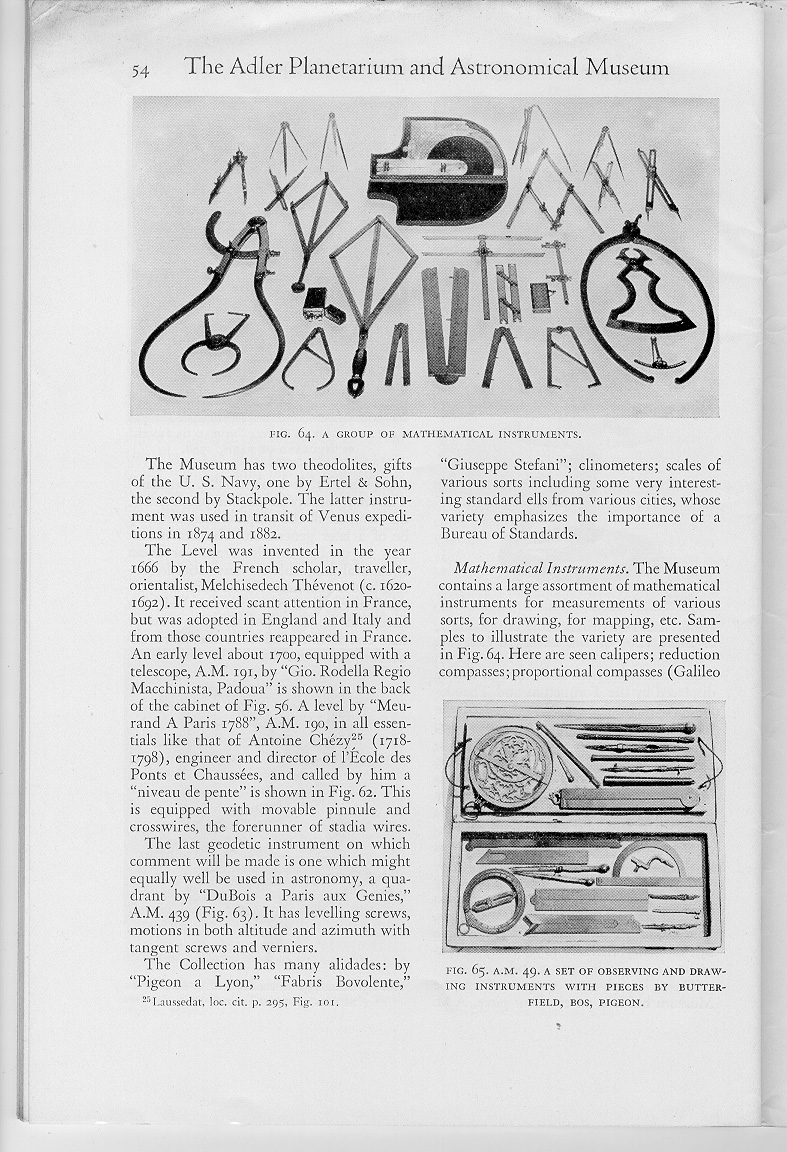
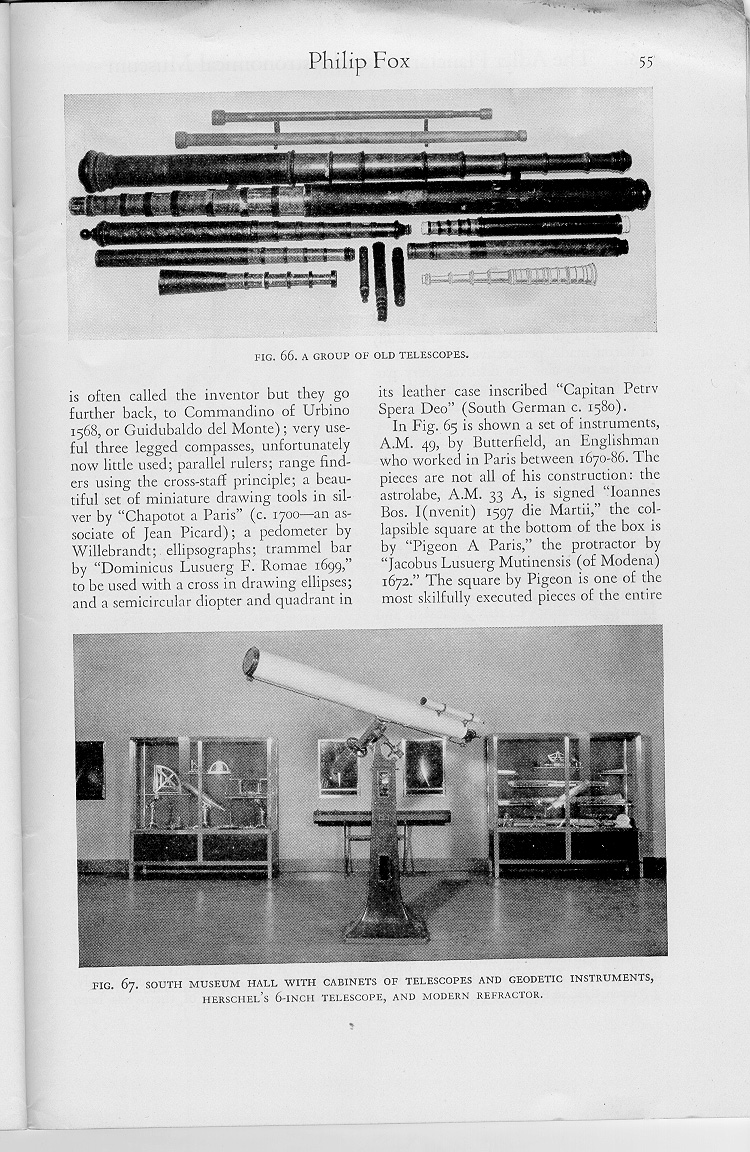
An Account of the Optical Planetarium and a Brief Guide to the Museum
By Philip Fox
Adler Planetarium's First Planetarium Director
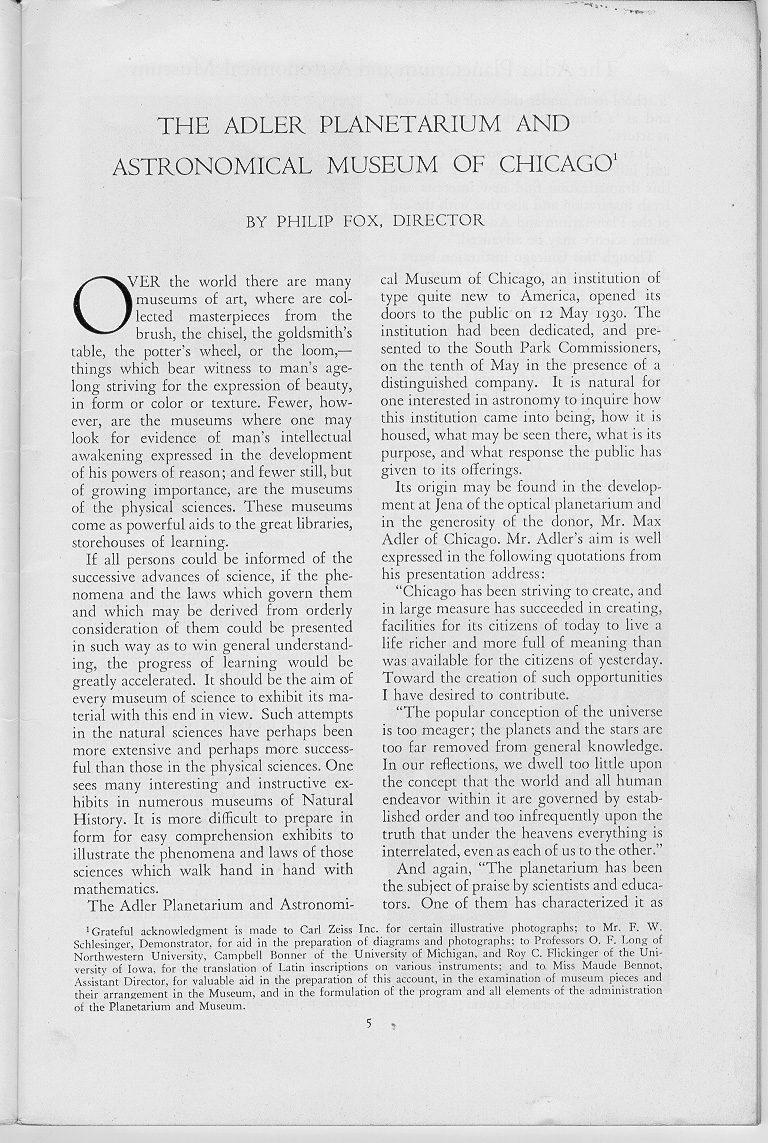
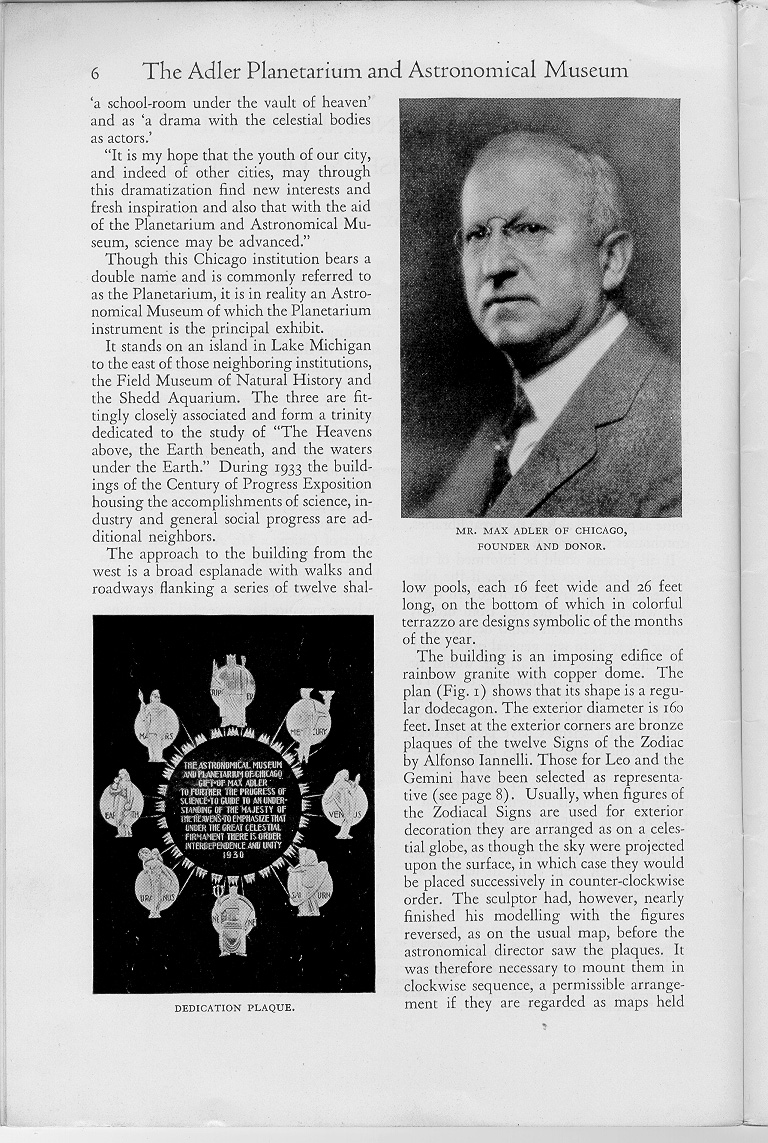
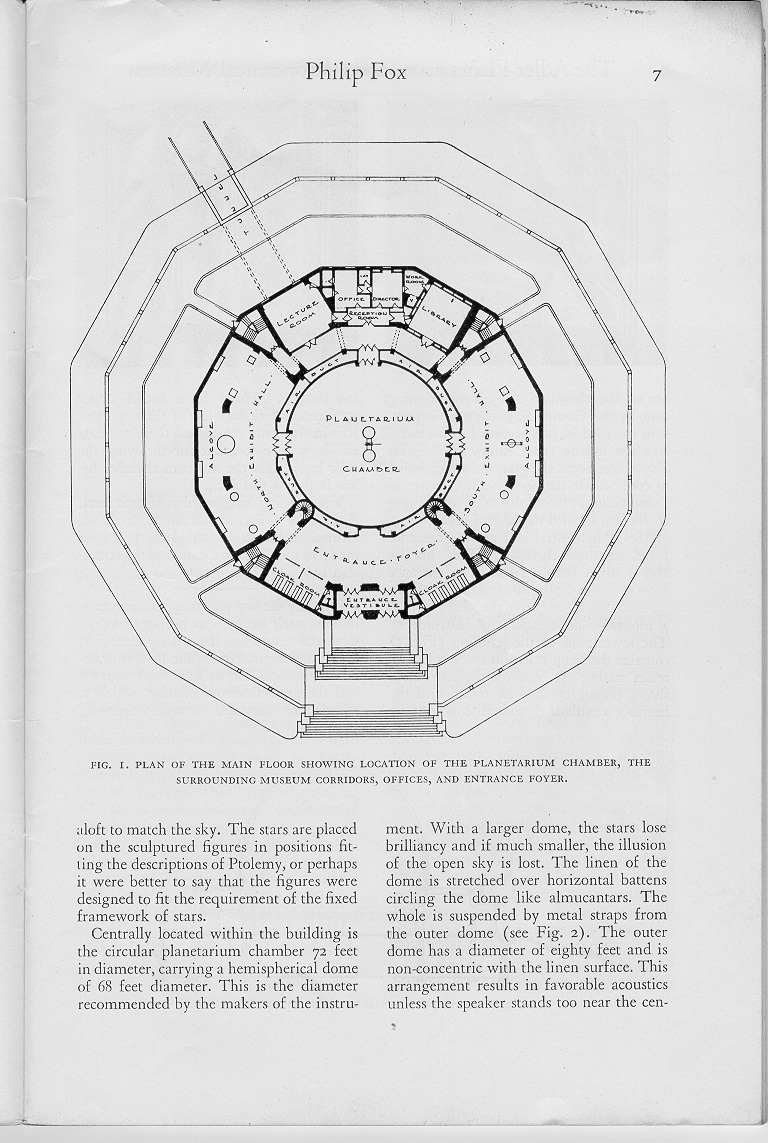
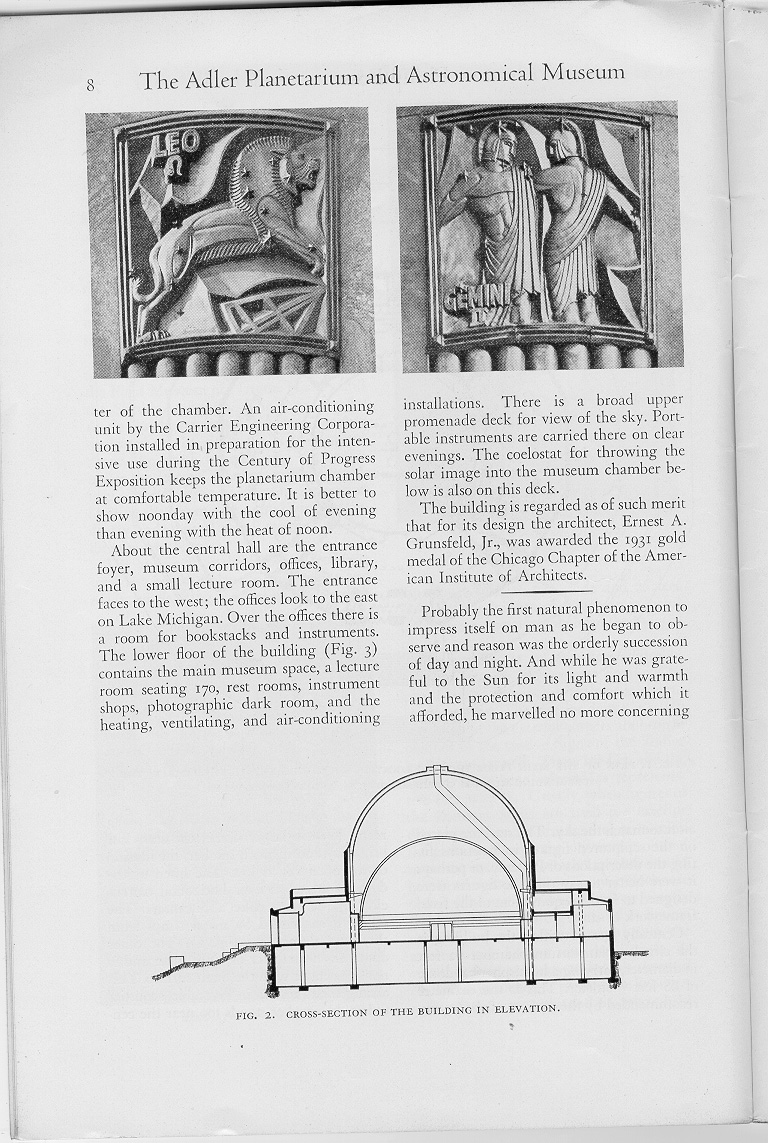
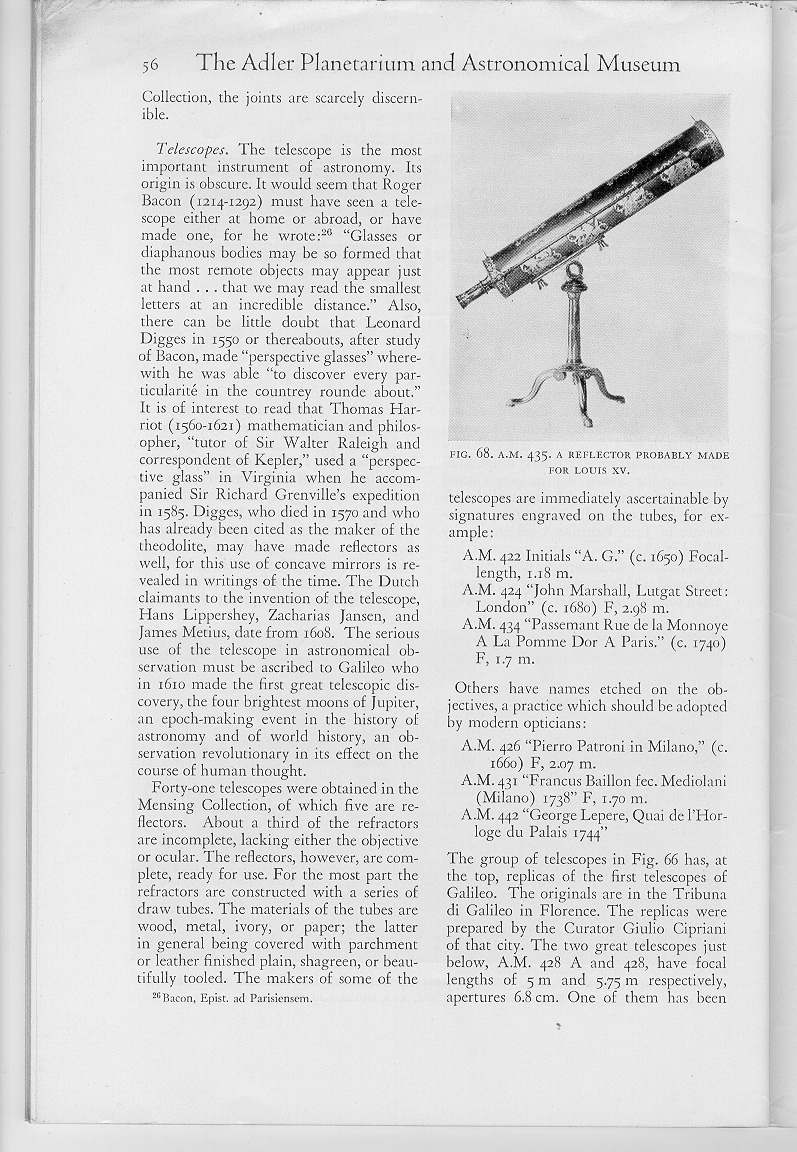
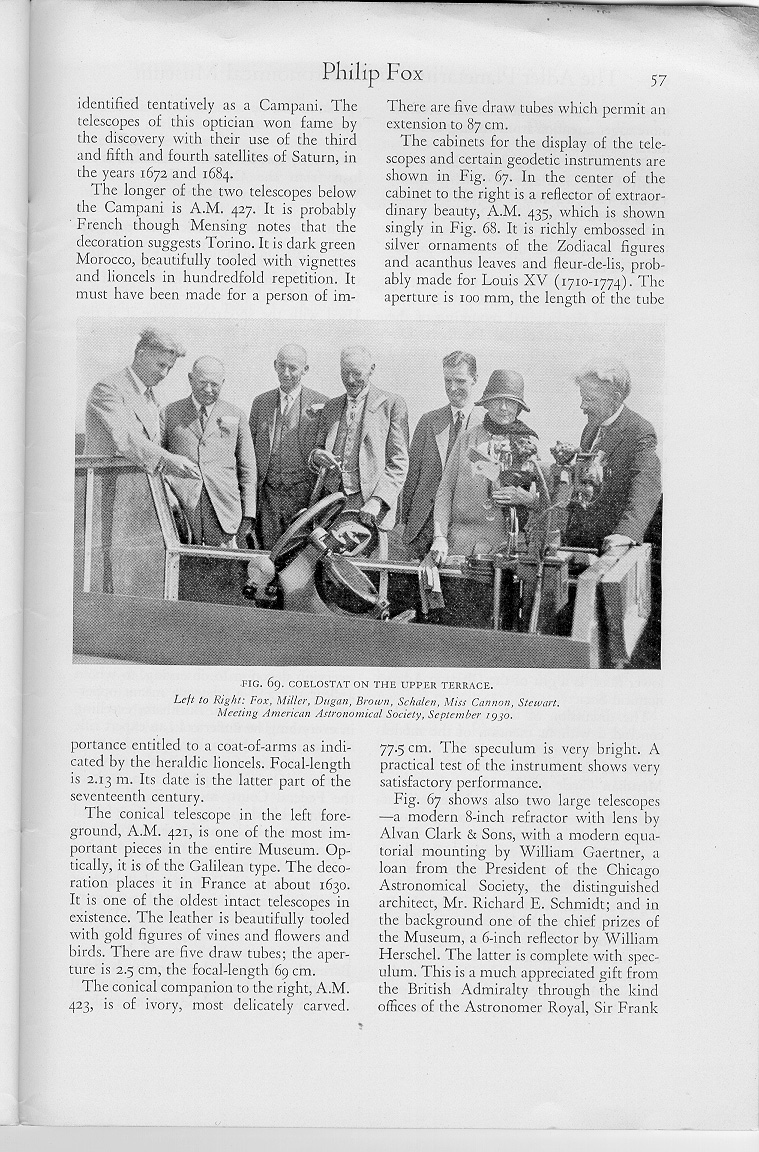
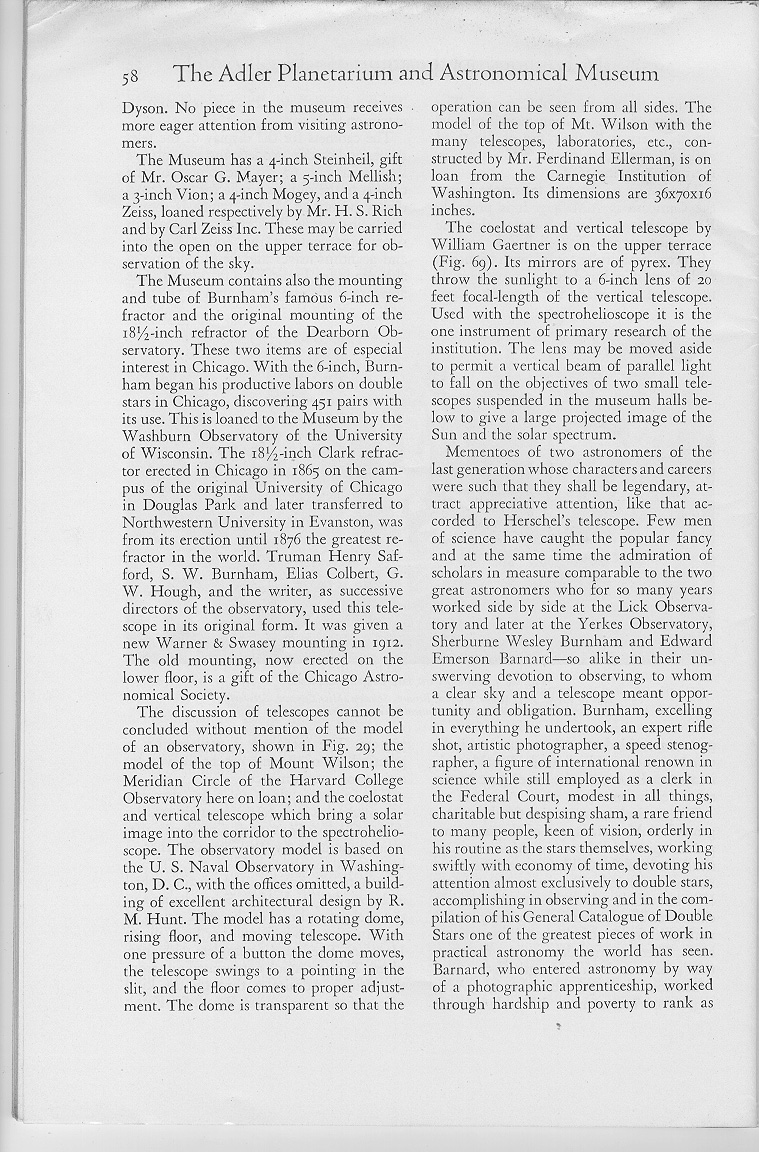
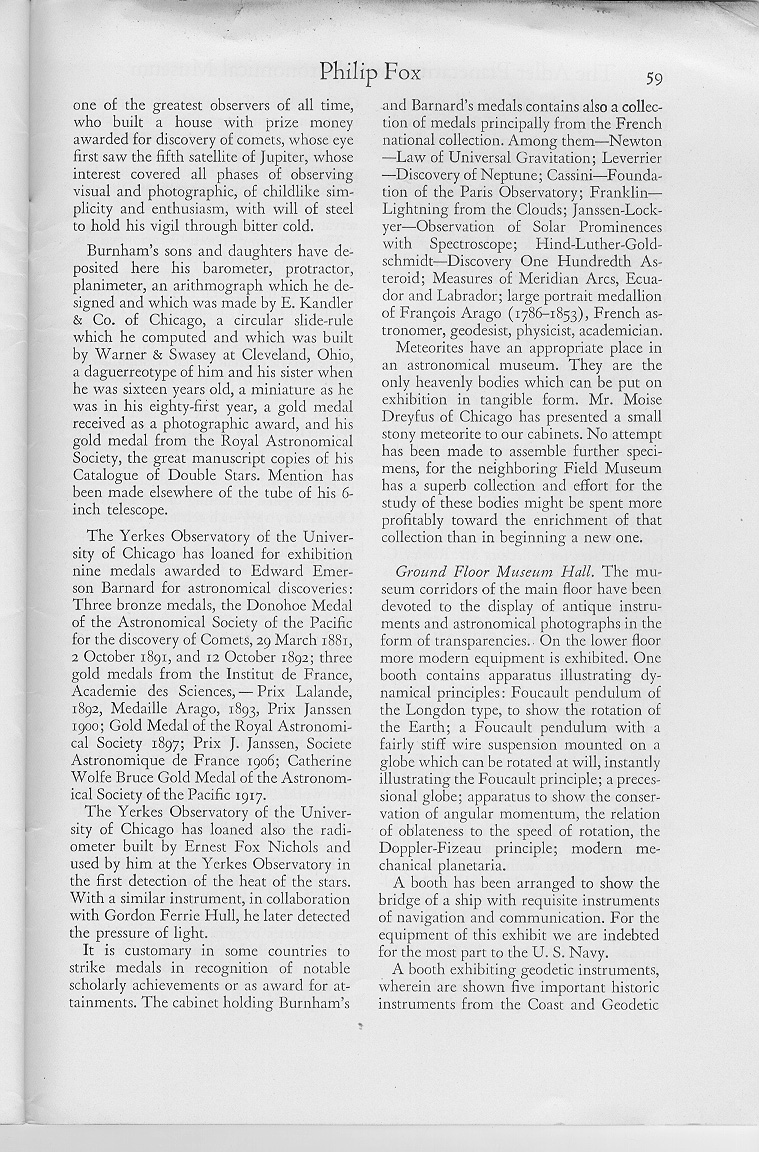
Adler Planetarium and
Astronomical Museum, An Account of the Optical Planetarium and a Brief
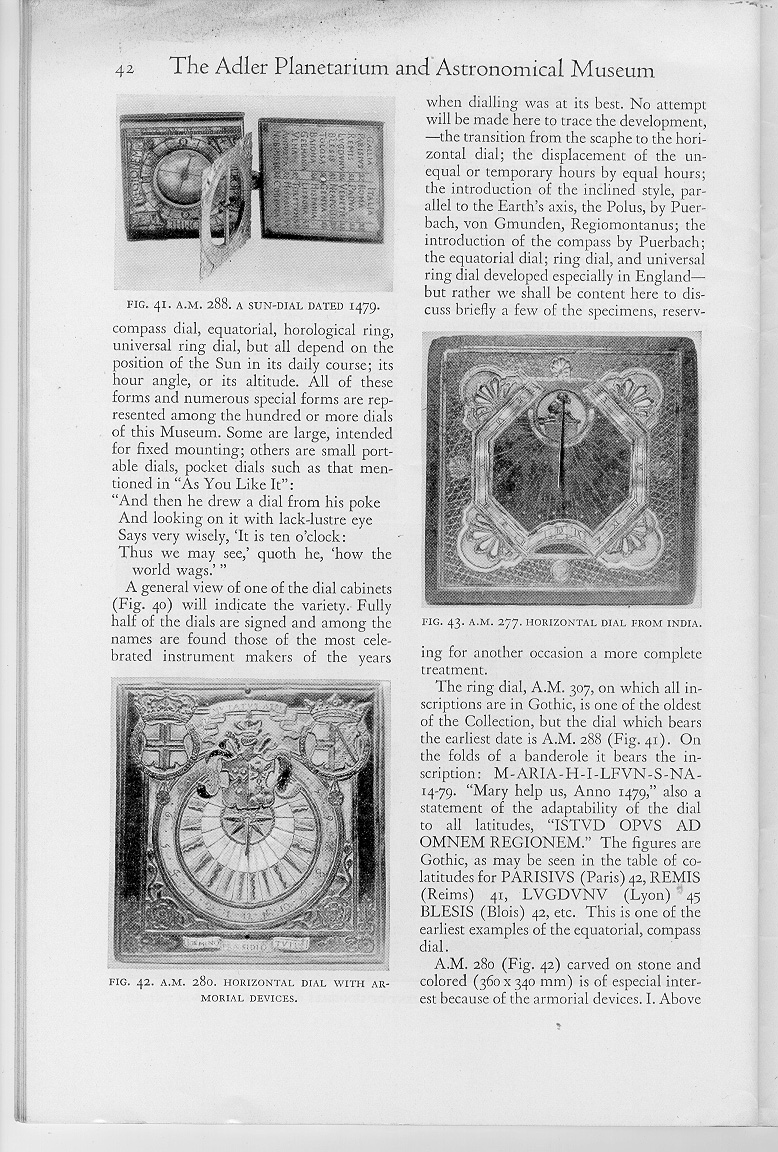
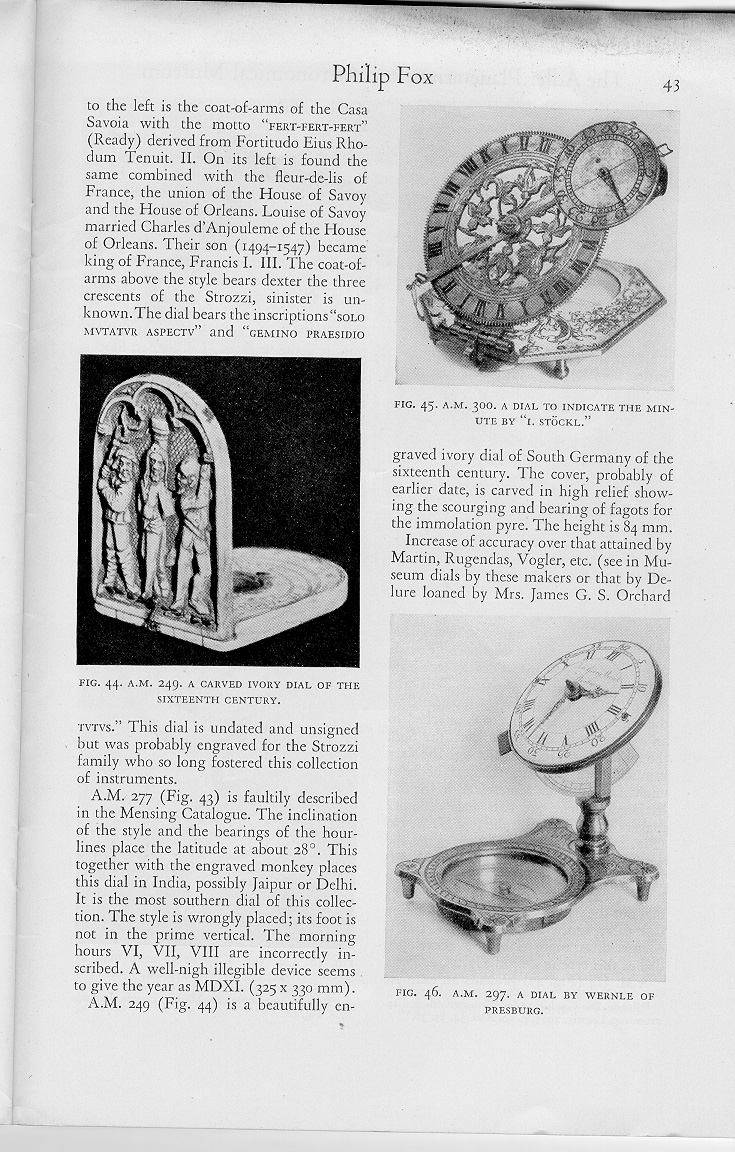
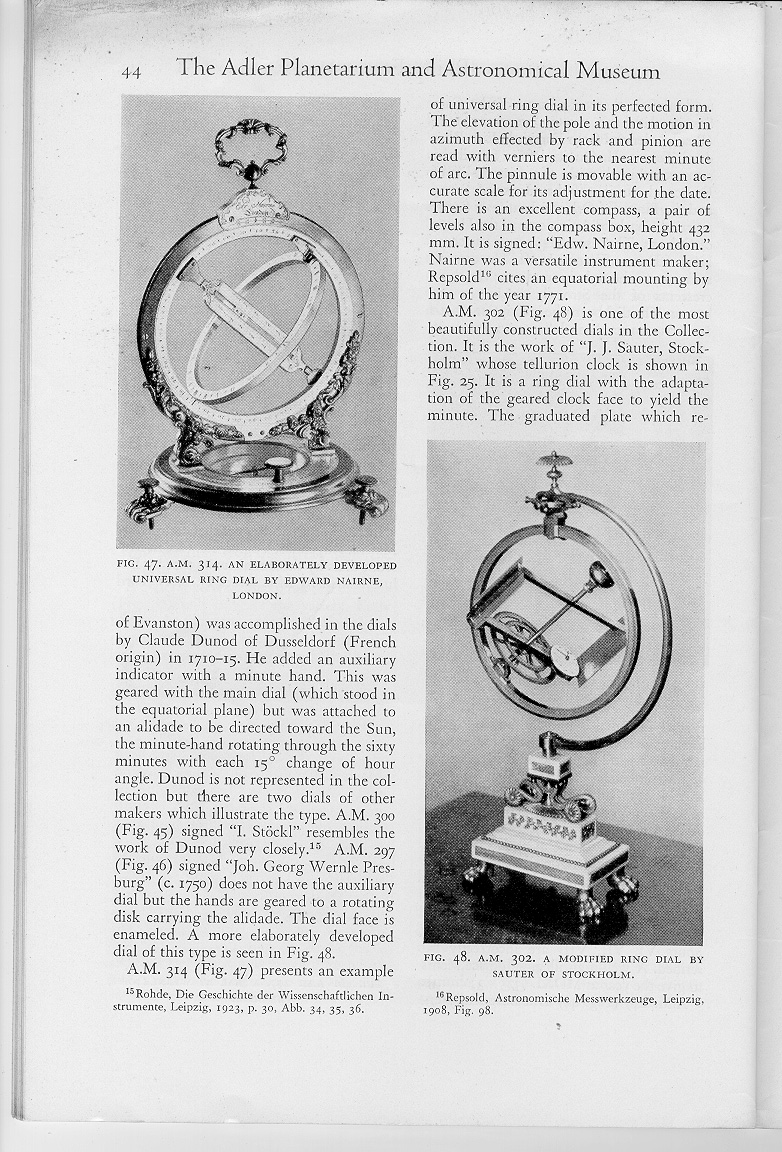
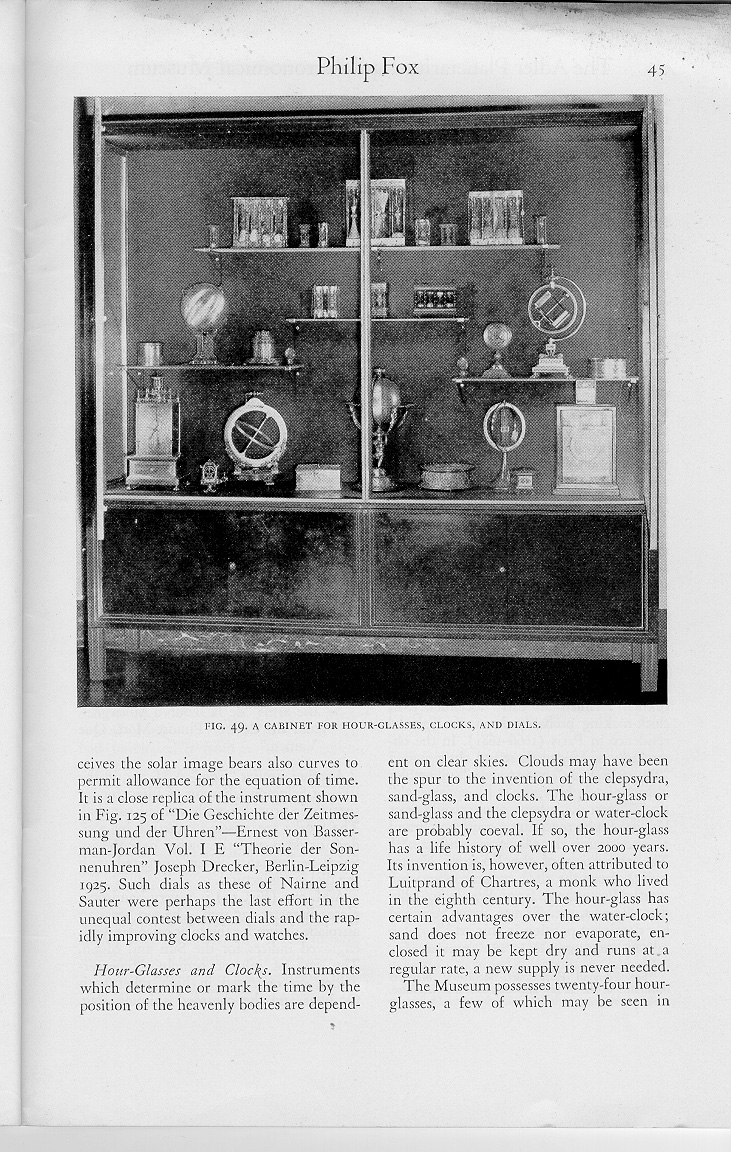
Guide to the Museum is reproduced, in its entirety, in the following
image links. The copy of this book, reproduced here, came from the
collection (pamphlet file) of the Andrew Carnegie Free Library and Music Hall in Carnegie, Pennsylvania.
Transit of the Planet Venus Across Image of Sun - 2004 June 8
Friends of the Zeiss sponsored the only observing session of this historic event
in Pittsburgh, open to the general public,
in conjunction with
the
Society for the Preservation of the Duquesne Heights Incline:
Have a Question About Astronomy or Other Sciences? Ask an Expert from Friends of the Zeiss!
History of Buhl Planetarium, Pittsburgh - Master Index
Authored By
Glenn A. Walsh - Informal Science Educator & Communicator
Sponsored By
Friends of the Zeiss ***
Electronic Mail: <
adler@planetarium.cc >
This Internet Web Page: <
http://adlerplanetarium.tripod.com > ***
Web Cover Page: <
http://www.planetarium.cc >
Web Page Disclaimer Statement & Info ***
History of Buhl Planetarium, Pittsburgh - Master Index
Twitter Page:
SpaceWatchtower ***
Facebook Page:
SpaceWatchtower
Other Internet Web Sites of Interest:
History of Andrew Carnegie and Carnegie
Libraries
History of Astronomer, Educator, and
Optician John A. Brashear,
Friend of Andrew Carnegie
History of The Buhl Planetarium and
Institute of Popular Science, Pittsburgh
Including the oldest operable major planetarium projector in the world
!
History of the Astronomical
Observatory of
The Buhl Planetarium and Institute of Popular Science, Pittsburgh
The Duquesne
Incline, Pittsburgh -
Historic Cable Car Railway Serving Commuters and Tourists since 1877 !
Antique Telescope Society
Other
History Links
Disclaimer Statement: This Internet Web Site is not affiliated with the
Adler Planetarium, Chicago,
Andrew Carnegie Free Library,
Ninth Pennsylvania
Reserves Civil War Reenactment Group,
Henry Buhl, Jr.
Planetarium and Observatory,
The
Carnegie Science
Center, The
Carnegie Museums of Pittsburgh/Carnegie Institute,
or
The Carnegie Library of Pittsburgh.
This Internet, World Wide Web Site administered by
Glenn A.
Walsh.
Unless otherwise indicated, all pages in this web site are --
© Copyright
1999 to 2020,
Glenn A. Walsh, All Rights Reserved.
The author thanks
The Carnegie Library of
Pittsburgh and the
Carnegie Library Community Network/Three Rivers Free-Net
for use of their digital scanner and
other computer equipment,
and other
assistance provided in the production of this web site.
Contact Web Site Administrator:
adler@planetarium.cc
Twitter Page:
SpaceWatchtower ***
Facebook Page:
SpaceWatchtower
Last modified : Sunday, 15-Nov-2020 09:31:14 EST.
This Internet World Wide Web Site originally created 1999 October 3.
You are visitor number  , to this web page,
since 2000 August 8. , to this web page,
since 2000 August 8.
|